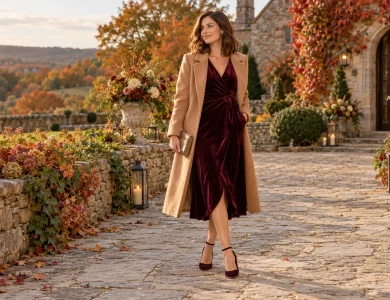
You can wear a saree in winter by adding thin layers that fit your blouse, keeping the pleats supported, and choosing outerwear you can remove indoors. Start with the outfit you own. A sweater, shawl or blazer can change the coverage without replacing the saree.
The awkward part is usually the fit: a thermal peeking through a neckline, a shawl pulling the pallu, or a thick waistband making sitting uncomfortable. This guide helps you choose a workable combination and check it before an office day, party or wedding.
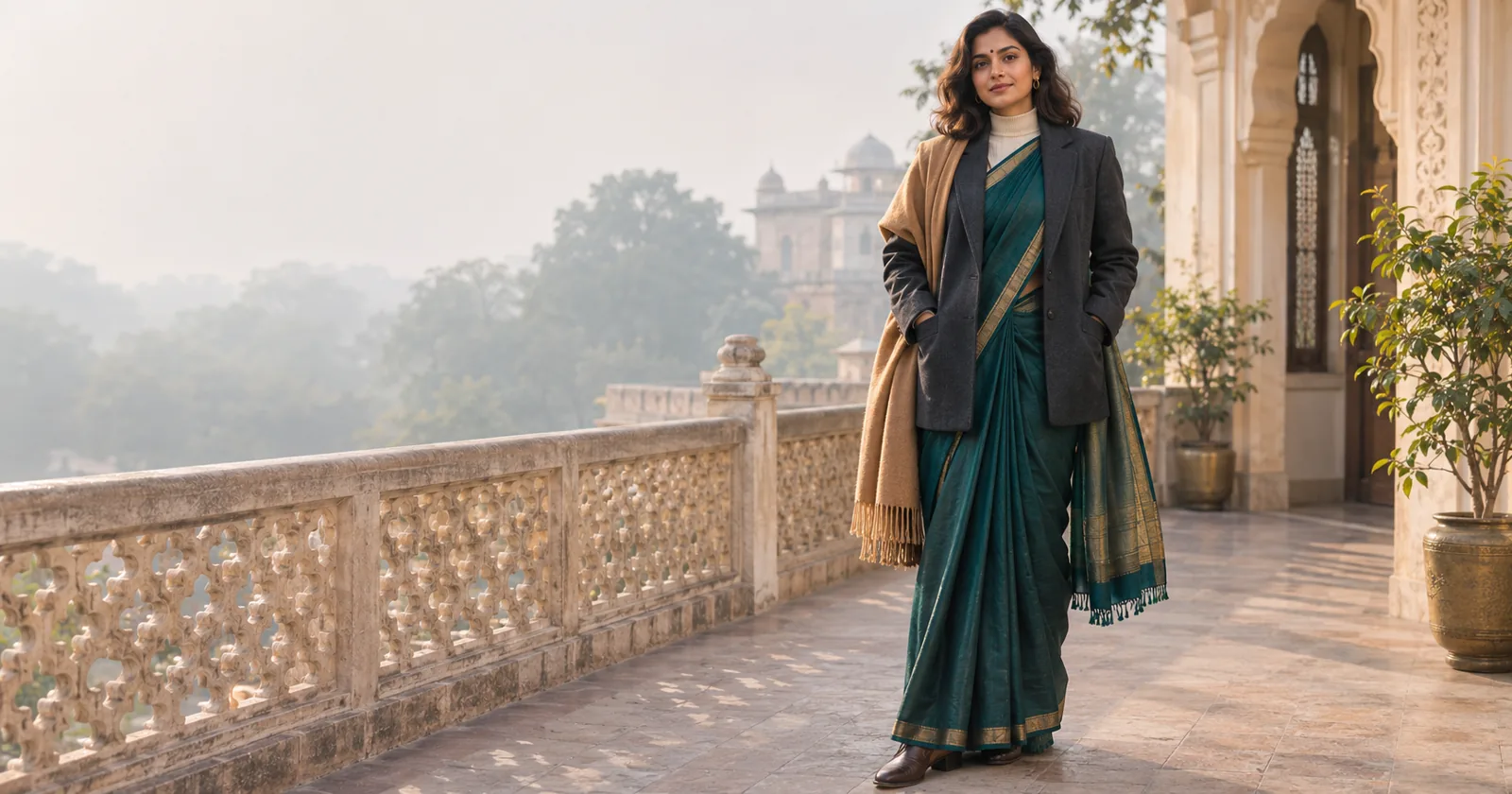
- Choose the blouse or sweater first, then decide which layers can fit underneath.
- Keep a suitable garment for supporting the saree tucks; leggings alone may not do that job.
- Let the pallu stay supported independently of removable outerwear.
- Check the whole outfit while sitting, walking and raising your arms.
How can you wear a saree in winter and stay warm?
Choose compatible coverage above and below the waist, then add a removable shawl, jacket or coat as needed. The combination should allow your blouse to close comfortably and your saree to hang naturally. Plan for the forecast, time outdoors and venue heating, rather than assuming one outfit suits every winter event.
Dress in this order: suitable inner layers, blouse or fitted knit, saree support garment, saree and pallu, then outerwear. Check the hem with your intended footwear. The pallu is the loose end of the saree carried over the shoulder; its position matters when another garment covers that shoulder.
Start with the blouse you already have
Your blouse determines whether a warm layer can sit underneath or needs to go outside. Try the actual combination before choosing accessories. If you must tug the blouse closed or cannot reach forward comfortably, adding more fabric underneath is unlikely to improve the fit.
| Your blouse | Check first | Layering option |
|---|---|---|
| Covered blouse with some ease | Neckline, back opening, sleeves and arm movement | Try a thin inner layer that fits without pulling or exposed edges. |
| Tight, sleeveless or low-back blouse | Whether inner fabric will show or restrict movement | Try a shawl, cardigan or jacket outside the finished drape. |
| Fitted sweater available | Coverage, stretch, length and waist bulk | Try the sweater instead of the blouse, with appropriate undergarments. |
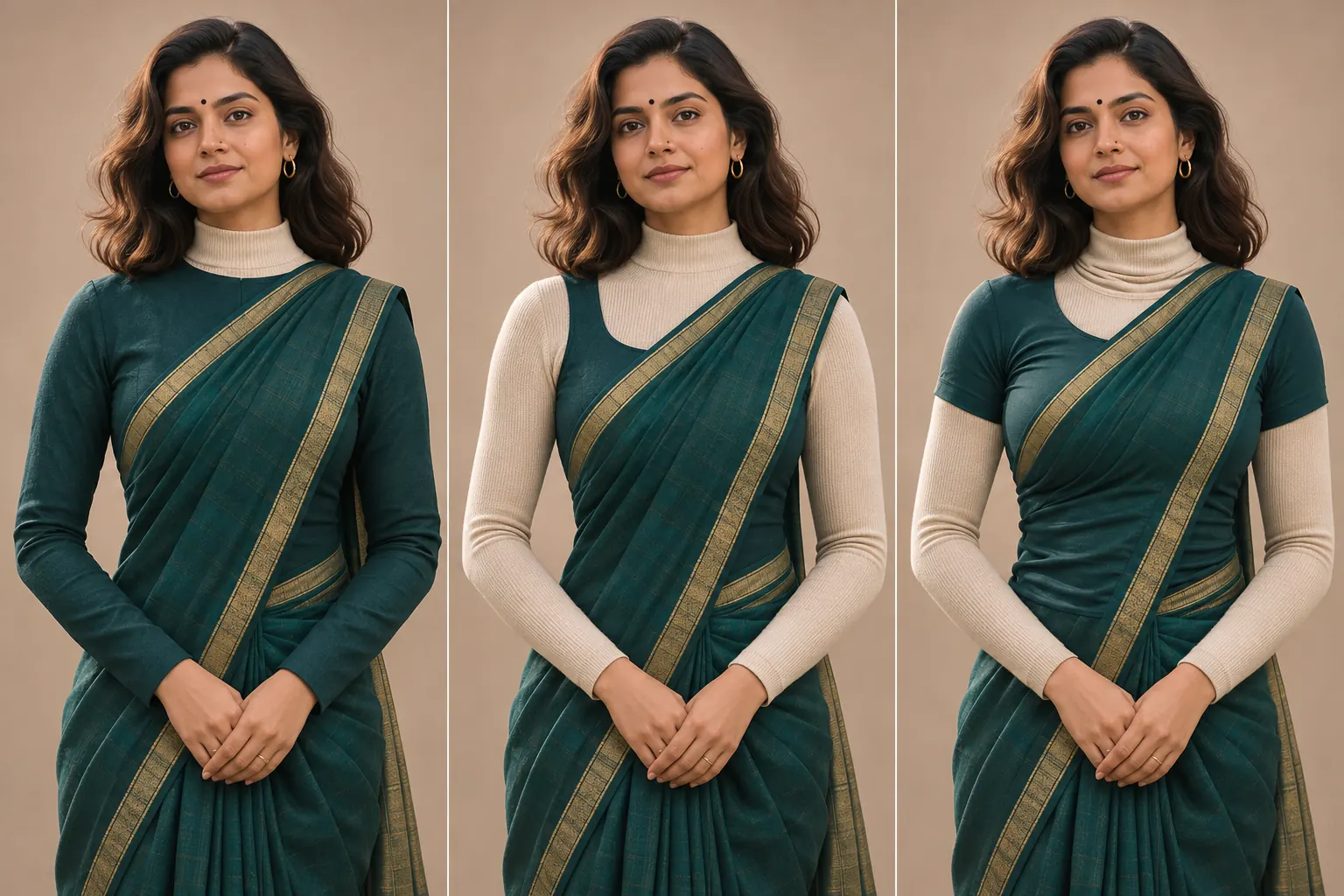
A visible thermal isn’t automatically a styling mistake. An ivory high neck can be an intentional part of the outfit. If you want a concealed layer, check every opening, including the back and armholes. A colour that blends under one saree may remain obvious under another.
For a blouse with little extra room, keep the inner layer light or choose outer coverage. Avoid forcing buttons, hooks or seams to carry tension. A comfortable blouse should still feel comfortable after you sit down, reach for a bag and put on your jacket.
Which saree is best for winter?
A saree that works with your layers and venue is the useful starting point. Denser fabrics may make inner layers less obvious, while sheer fabrics reveal more of what sits underneath. Fibre names alone cannot tell you how warm a finished outfit will feel.
A silk or Banarasi saree can work with a covered blouse and a structured jacket. A cotton blend may suit a daytime office look with a fitted knit. With chiffon or organza, inspect visible seams, thermal edges and the waistband in daylight before deciding what to conceal.
You can still wear a lightweight saree indoors when the setting and your comfort allow it. Plan a separate outer layer for travel or time outside. Don’t choose a heavier saree solely for its appearance if its stiffness makes the complete outfit difficult to manage.
Put warm layers underneath without crowding the waist
Thin layers are easier to arrange when each garment has a clear job. A thermal provides added coverage; a petticoat or other suitable saree support garment holds the tucks. Check the combination together rather than assuming stretchy leggings can support the drape on their own.
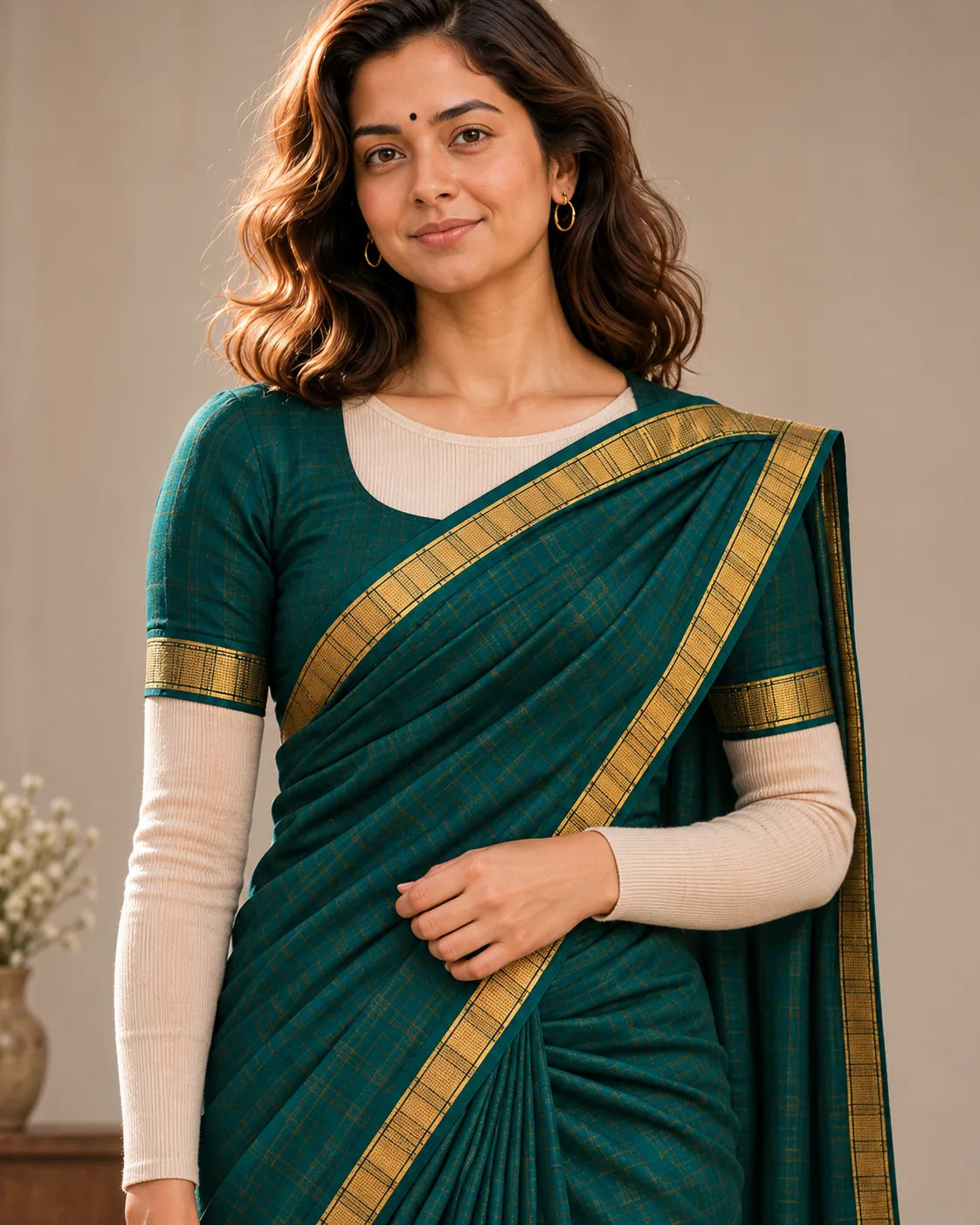
A petticoat is the underskirt traditionally used beneath a saree. If you use another support garment, make sure it is intended for that purpose and works with your drape. Arrange inner layers smoothly before forming the pleats. Several rolled edges at the same waist level can create uncomfortable pressure.
Try sitting before you finish pinning everything. If fabric gathers at the waist, flatten the layers or change a garment rather than tightening the saree further. Check the back in a mirror too: a smooth front can hide bunching behind you.
Use the shoes you intend to wear when setting the hem. Recheck after adding the outer layer, especially if its weight changes how you stand or move. Follow the care instructions for each fabric when choosing fastening methods.
Three ways to style a saree with winter layers
Choose one main arrangement, then add only the coverage you need. A sweater worn instead of a blouse works differently from a sweater pulled over the completed saree. A shawl and blazer also change access to the pallu, so decide where that loose end will sit before leaving.
Wear a fitted sweater or turtleneck with the saree
For this option, use the fitted knit instead of the blouse. The illustrated ivory high neck makes the added coverage visible and intentional. Choose a knit that allows arm movement and does not create a thick fold at the waist.
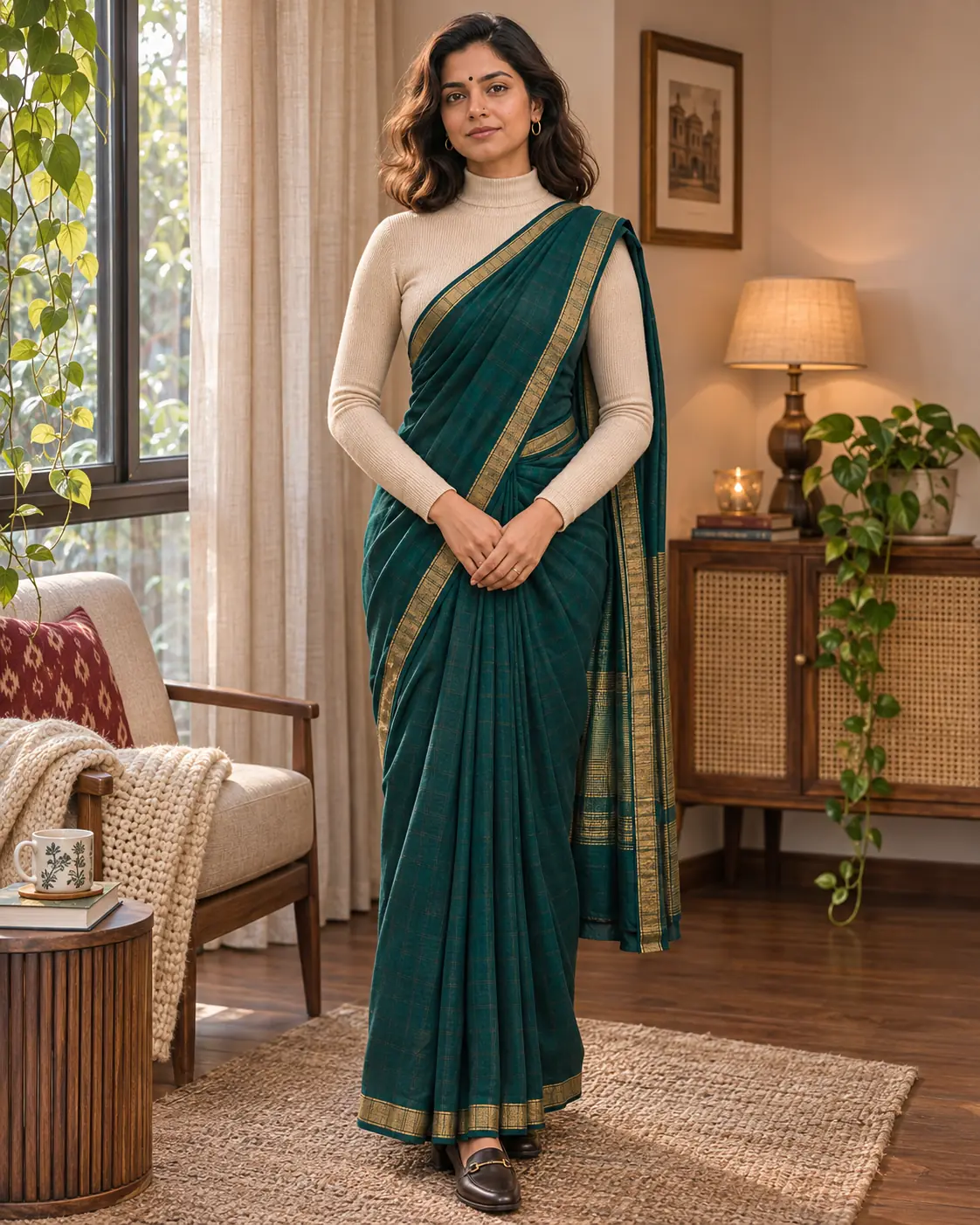
- Put on the knit with suitable undergarments and check its neckline and sleeves.
- Arrange its hem smoothly with your support garment. Avoid a bulky rolled edge.
- Drape the saree and place the pallu over the left shoulder, if that suits your usual drape.
- Choose a fastening compatible with the fabrics; check delicate knits for snagging.
- Reach forward and sit down. Reposition the pallu if it pulls across the chest.
If the sweater is thick or long, try a different knit before squeezing it into the waistband. A loose sweater over a finished saree is another look, but it can hide the pleats and complicate access to the pallu.
Drape a shawl while keeping the pallu visible
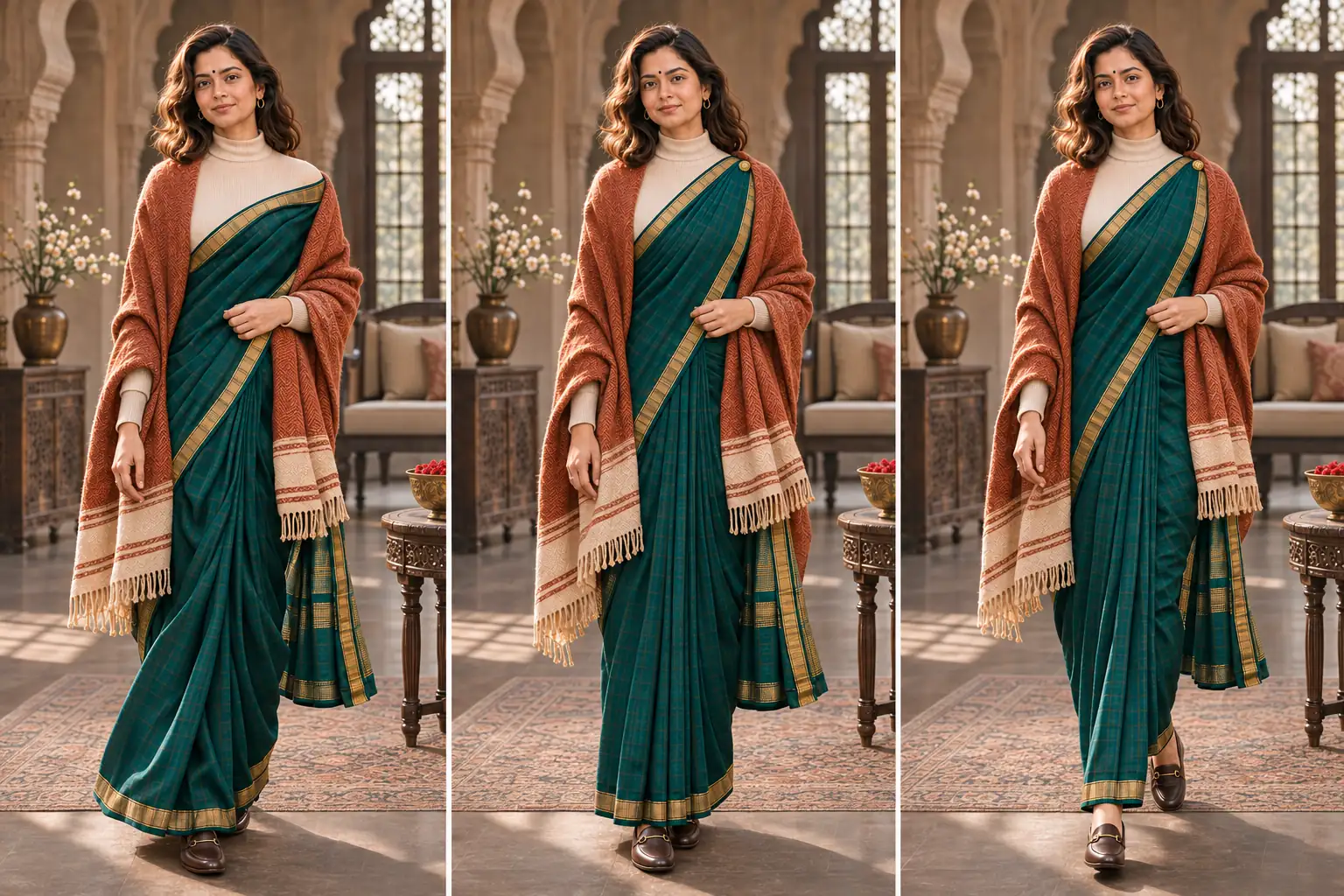
A shawl can add removable shoulder and arm coverage without changing your blouse. The illustrated wrap sits around both shoulders, with the saree’s gold border visible through the front opening. Adjust that opening according to how much coverage you need.
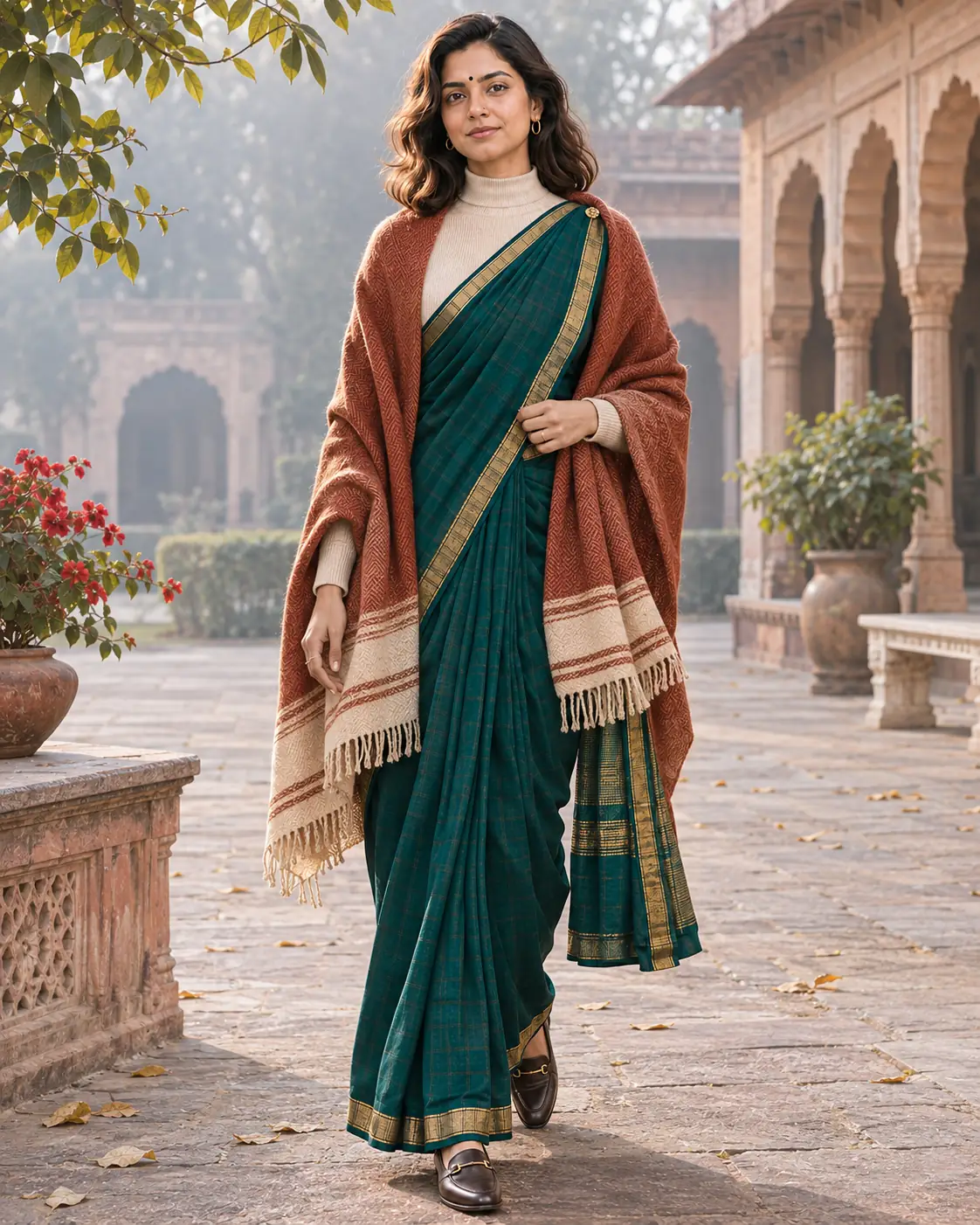
- Finish the saree and support the pallu at your chosen shoulder position.
- Place the shawl across your back and bring its ends forward over your arms.
- Leave a front opening where you want the saree border to show.
- If using a brooch or fastening, check its placement and effect on the fabric first.
- Walk and move both arms. Adjust the shawl if it drags the pallu backwards.
A decorative one-shoulder drape leaves an arm exposed. For more coverage, spread the shawl across both shoulders and check it while seated. Keep long fringes away from your shoes.
Add a blazer, jacket or long coat
A saree with a blazer can suit an office or smart occasion when the jacket fits over the chosen blouse or knit. An open front leaves more of the drape visible. A long coat provides another removable option for travel and time outdoors.
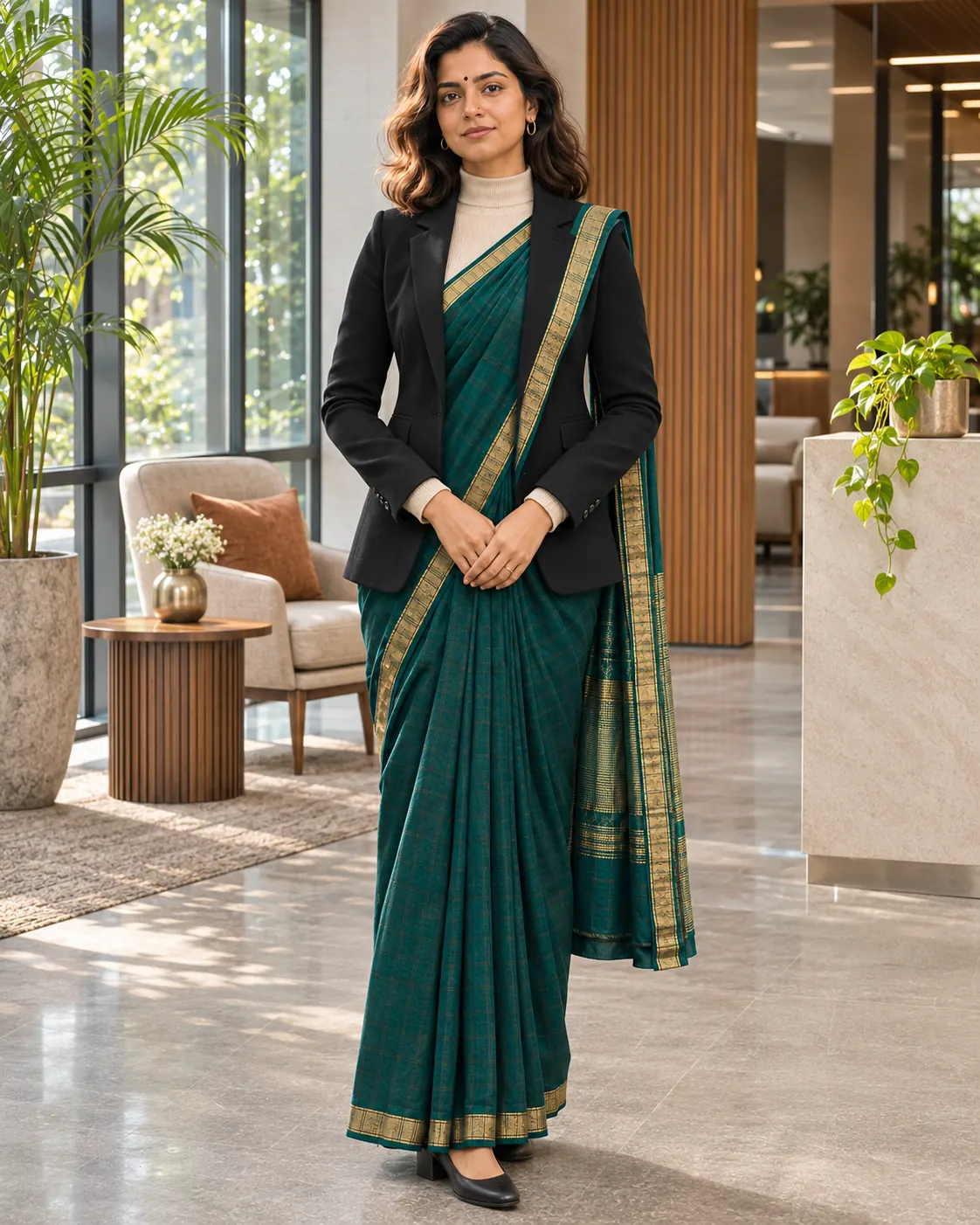
- Complete the saree and establish its pallu support before adding the jacket.
- Put on the outer layer without pulling the shoulder fastening.
- For a visible pallu, arrange its hanging section outside the jacket opening.
- Check the collar and sleeve area for trapped fabric.
- Reach forward, sit and try removing the jacket slowly. Adjust any part that catches.
If the pallu repeatedly catches under the lapel, try a simpler route or different outerwear. Don’t rely on the blazer’s weight to keep the saree in place.
Watch a winter saree styling tutorial
For more visual styling ideas, watch Prerna Chhabra’s winter saree tutorial, which includes a knitted top paired with a saree. Use it alongside the fit and layering checks above when choosing your own combination.
Video: How to wear SAREE in Winters | Indian Ethnic Wear Part 2 by Prerna Chhabra.
Move indoors without redoing the whole drape
Keep the saree supported independently of the garment you plan to remove. Before the event, rehearse taking off that shawl or coat with the complete outfit on. These are suggested checks; the illustrated transition has not been physically tested.
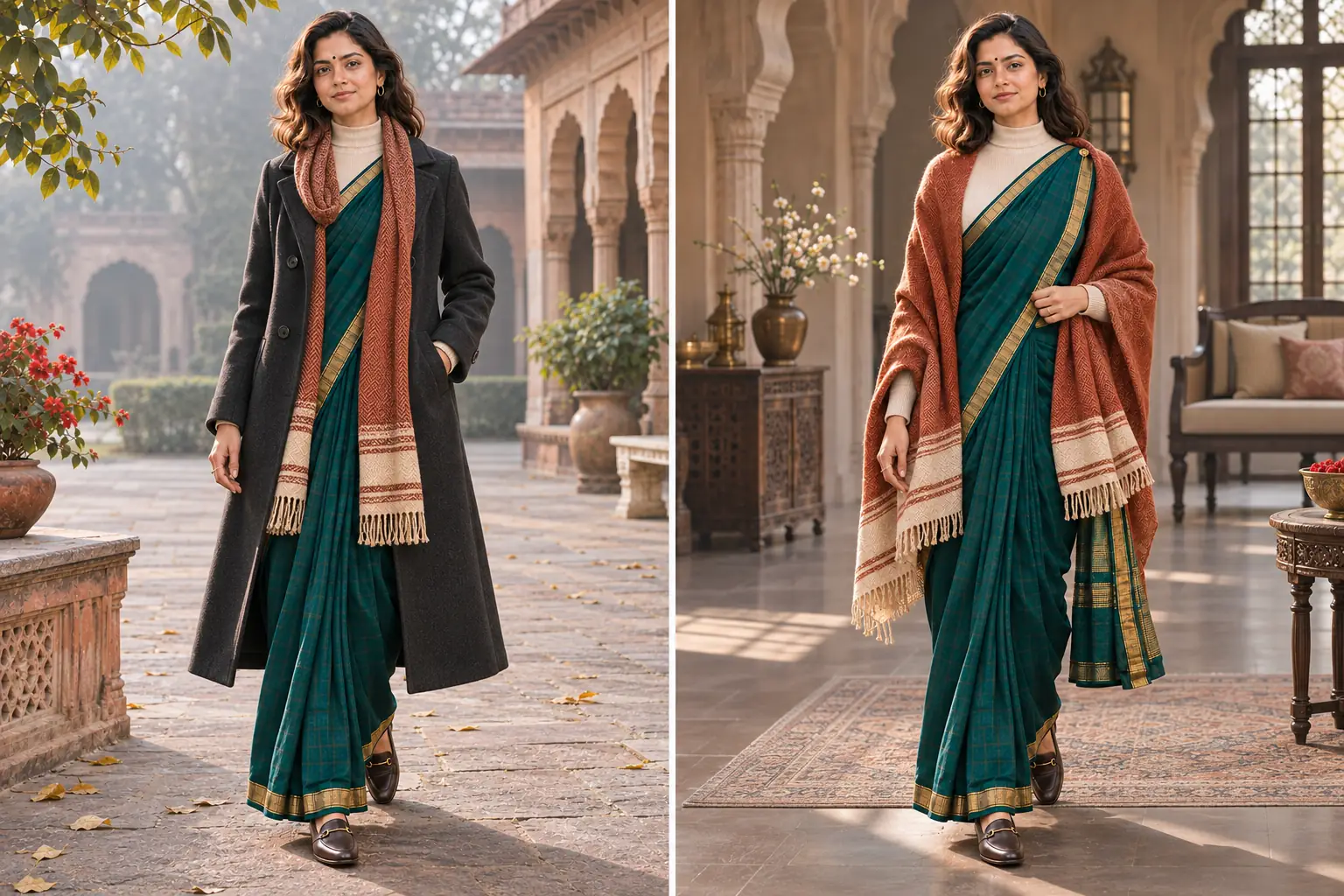
- Check which fastenings belong to the pallu and which belong only to the outer layer.
- Release any outerwear fastening that would pull on the saree.
- Support the pallu with one hand while easing the garment off the other shoulder.
- Remove the second sleeve or shawl end, then inspect the neckline, shoulder and pleats.
- When dressing again, put the outer layer on slowly and restore the chosen pallu route.
If this requires undoing the main drape every time, simplify the arrangement at home. Keep a place for the removed garment in mind: a bulky coat over your arm can make managing a bag and pallu harder.
What footwear should you wear with a saree in winter?
Closed shoes, loafers or comfortable block heels can work, depending on your venue and preferences. Check whether socks fit without making the shoe tight. The useful test is whether you can walk comfortably with the saree hem clear of the ground and your feet.
Set the hem with those shoes on. Take a few steps, turn and try any stairs you expect to use. Outdoor lawns, uneven paving and indoor floors need different consideration. If you change shoes during the event, recheck the hem rather than assuming the original length still works.
Fix slipping, pulling and bunching before you leave
Treat each problem as a clue, then change one thing and repeat the movement that caused it. A slipping pallu can have several causes; tightening everything may create a new problem elsewhere. Start with the area that shifts rather than rebuilding the whole outfit immediately.
| Symptom | Possible cause | Adjustment to try | Recheck |
|---|---|---|---|
| Pallu slips | Loose support or outerwear dragging it | Reposition the pallu support and free trapped fabric. | Walk and reach forward. |
| Waist feels bulky | Several folded hems in one place | Smooth the layers or try a thinner, shorter knit. | Sit and stand. |
| Blouse or sleeves pull | Too little room for the inner layer | Try less fabric underneath or use outer coverage. | Raise and cross your arms. |
| Thermal edges show | Neckline, sleeve or opacity mismatch | Choose compatible coverage or make the visible layer intentional. | Inspect front and back in relevant light. |
| Hem catches your shoe | Length no longer suits the footwear | Reset the drape with the intended shoes. | Walk, turn and use a step. |
Check again after adding your bag. A shoulder strap can disturb the same area that carries the pallu. If a fastening causes discomfort, catches fabric or restricts movement, change the setup before you leave.
Adapt the outfit for an office, party or winter wedding
Use the occasion to choose the finish, and the venue to choose coverage. The same saree can look different with a knit, shawl or structured outer layer. These are styling proposals; adjust them to your forecast, journey and comfort.
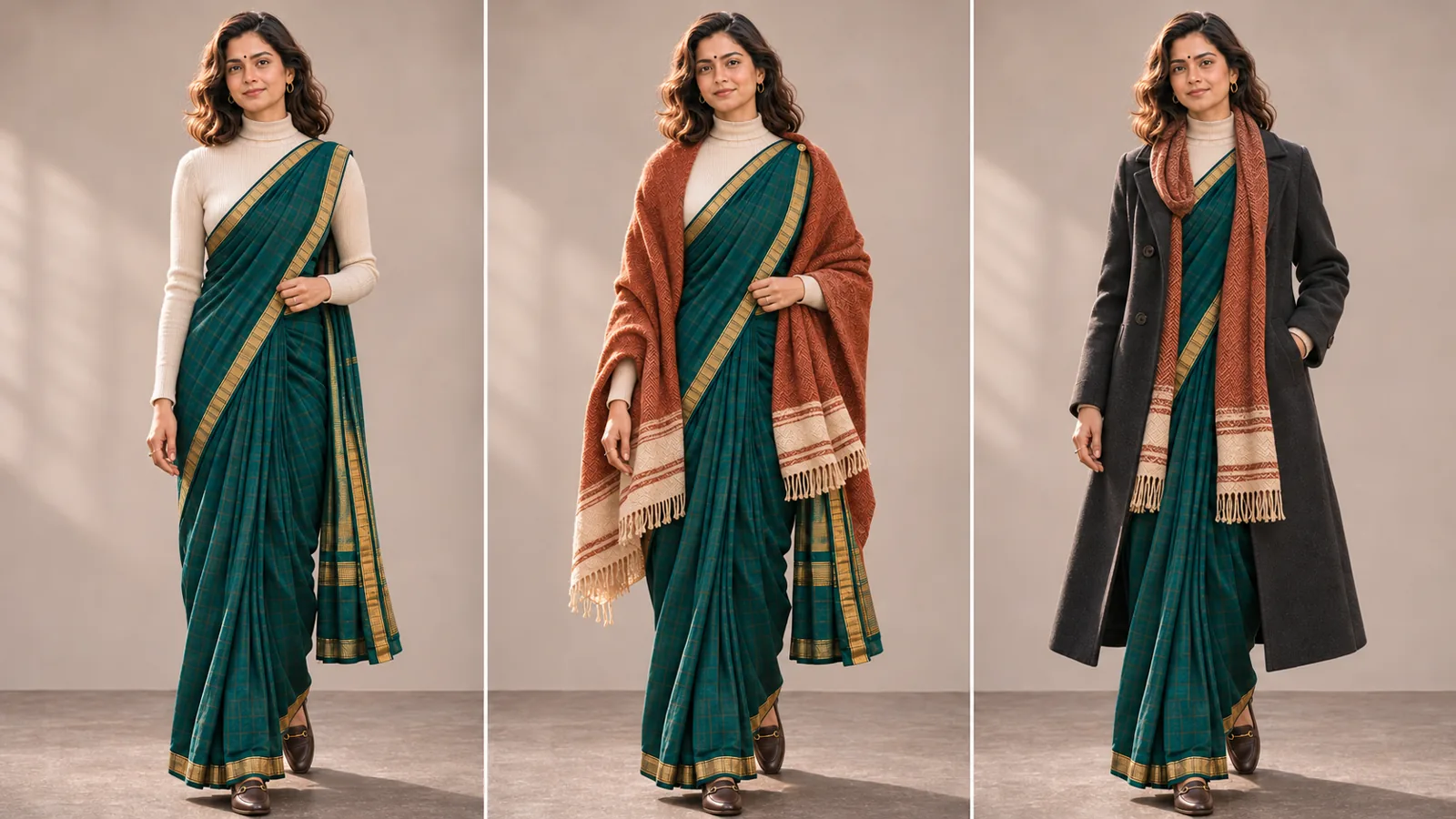
Office: Try a saree with a fitted knit or comfortable blouse, an open blazer and closed shoes. Add a compatible inner layer if needed. At your desk, remove the blazer only if the remaining coverage feels comfortable.
Party: Pair your existing blouse with a shawl that covers the areas you need. Keep the pallu independently supported so you can loosen the wrap indoors. Check your shoes against the venue floor and hem length.
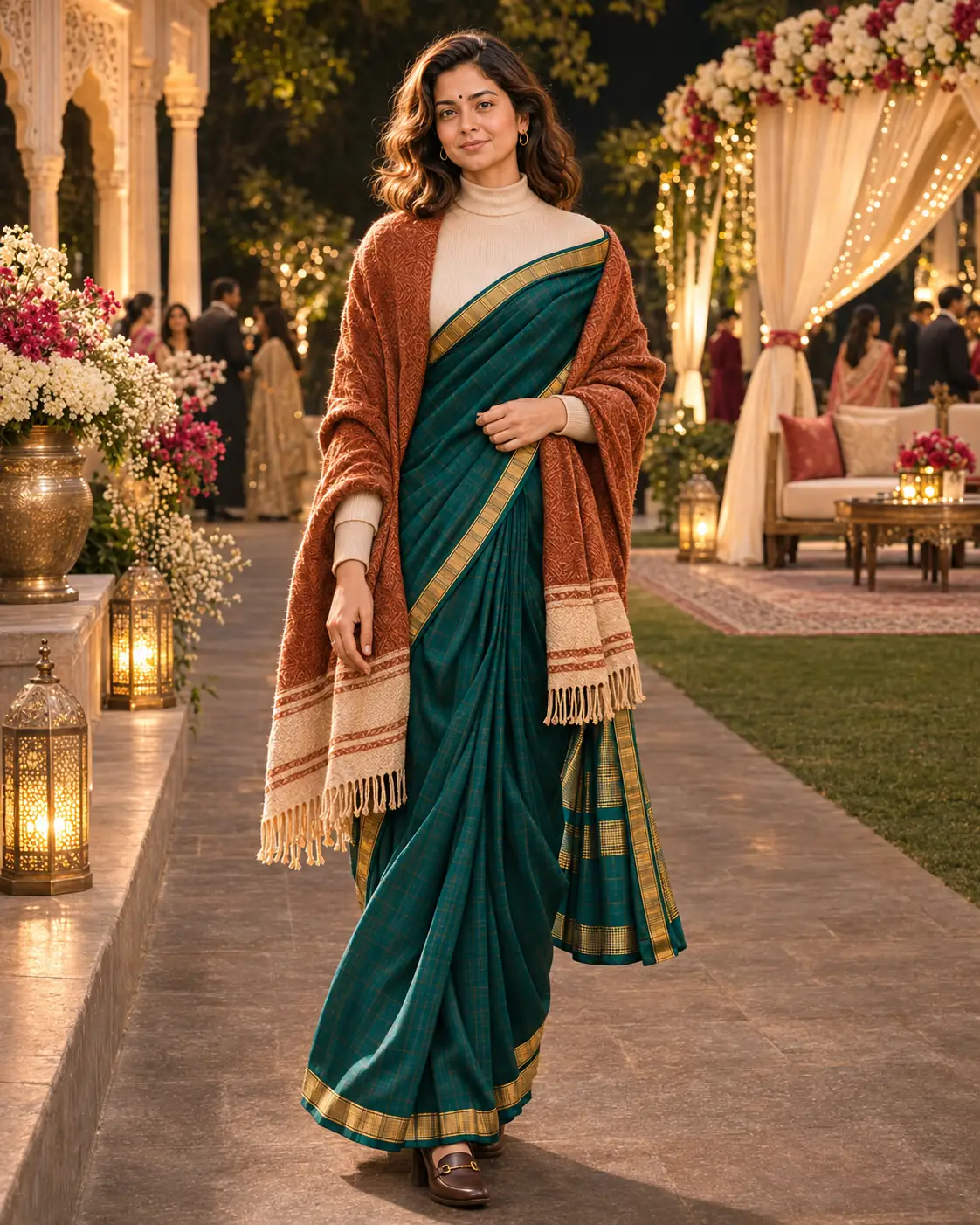
Winter wedding: Consider a covered blouse or fitted knit, compatible inner layers, a wrap and comfortable closed footwear. Pack outerwear for travel or an outdoor ceremony. For broader occasion choices, see our winter wedding guest outfit ideas.
Questions about wearing a saree in winter
Can I wear a sweater instead of a saree blouse?
Yes, a suitable fitted sweater can replace the blouse. Check coverage, stretch and its hem before draping. Keep a separate, appropriate garment for supporting the saree tucks. The sweater illustration shows this route, with the pallu over the knit.
Can I keep a sleeveless blouse for a winter event?
You can try outer coverage such as a shawl or jacket. Whether it feels sufficient depends on the venue, time outside and your comfort. Check what happens when you remove that layer indoors before committing to the outfit.
How can I check whether my thermal shows through?
Wear the complete combination and inspect it in daylight and the lighting expected at the venue. Look at the back, neckline, sleeves and pleats. Ask someone to check areas you cannot see easily. Change visible edges or treat them as intentional styling.
Trial the complete outfit before the event, including your bag and shoes. Keep the combination that lets you sit, walk and adjust your outer layer comfortably.