How to Layer Necklaces on a Turtleneck: 6 Zero-Tangle Combinations for Winter High Necks

Disclosure: This post contains Amazon affiliate links. If you buy through these links, StyleRole earns a small fee at no extra cost to you.
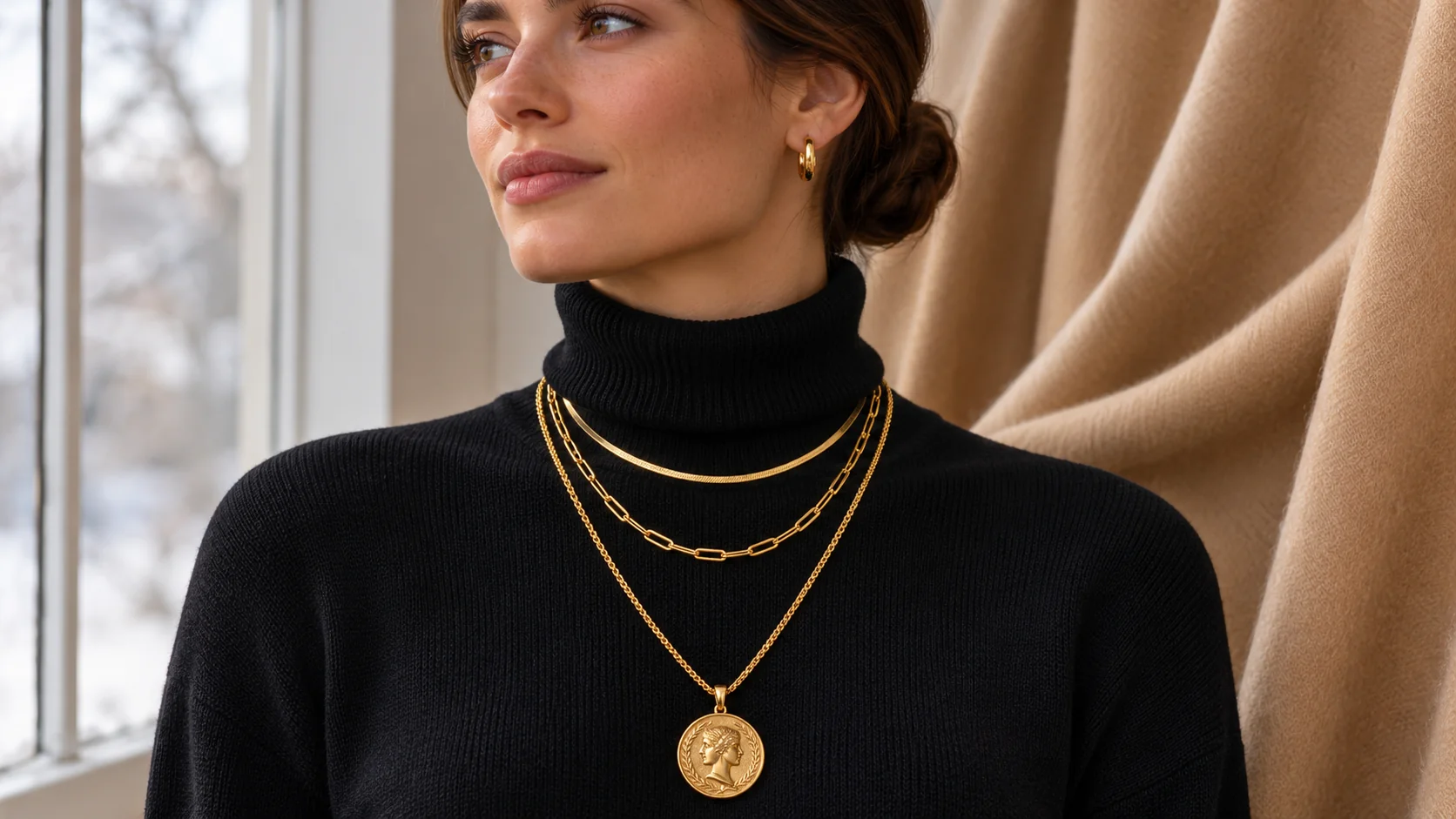
Learning how to layer necklaces with a turtleneck takes four clear rules. Start two inches below the knit fold. Leave a two-inch vertical gap between chains, like 18, 22, and 28 inches. Mix flat snake links with open paperclip links. Finish your necklace layering turtleneck stack with weight.
Quick-Shop: 9 Turtleneck Necklace Layering Essentials
Curated for the 6 Zero-Tangle High-Neck Combinations (Amazon Picks)
18-Inch 14K Gold Paperclip Chain
Open 4mm oval links show well on smooth merino and resist twists.
18-Inch Flat Herringbone Snake Chain
Flat smooth links drape below knit cuffs and keep wool loops intact.
24-Inch Heavy Cuban Curb Chain
Bold 5mm metal links stay visible on thick cable-knit sweaters.
22-Inch Coin Medallion Pendant
Eight-gram medallion anchor keeps bottom strands straight down your chest center.
18-Inch Baroque Pearl Strand
Natural freshwater pearls lift warm camel, cream, and espresso cashmere.
30-Inch Diamond-Cut Rope Chain
Long opera drop clears cowl folds and draws the eye down your frame.
32-Inch Adjustable Lariat Y-Necklace
Deep V drop breaks up solid wool sweater blocks with clean vertical line.
3-Strand Magnetic Spacer Clasp
Tarnish-resistant 316L steel barrel magnet locks strands half an inch apart.
Clasp Counterweight Drop Charms
Weighted 1-inch tail drops hang behind your neck so clasps stay back.
You slip on a fitted black knit at 8 AM and add two gold chains. By noon, both strands twist into a rope, and the clasp sits under your chin. High cuffs cover your collarbone and grip light metal. Fix that slip in minutes using these polished styling rules and hardware tricks.
The 2-Inch Drop Rule: How Collar Heights Dictate Your Chain Lengths
The 2-inch drop rule stops winter chains from twisting or hiding inside knit folds. Set your first chain two inches under the collar seam. Next, leave two clear inches between each lower strand. A smart 18, 22, and 28 inch cascade clears a rolled cuff cleanly and stays out of the 14 to 16 inch zone.
Every winter knit covers a distinct part of your neck. Treating a thick four-inch roll collar like a flat mock neck causes bunching. Check your collar style first, then pick your chain lengths.
| Collar Style | Collar Height | Danger Zone to Avoid | Starting Base Tier | Middle Frame Tier | Bottom Ballast Tier |
|---|---|---|---|---|---|
| Folded Roll Turtleneck | 3.5 to 4.5 in | 14 to 16 in | 18 to 20 in | 22 to 24 in | 28 to 30 in |
| Fitted Unfolded Mock Neck | 1.5 to 2.5 in | 15 in seam line | 16 in collar hugger | 20 in princess | 24 in matinee |
| Loose Draped Cowl Neck | 5.0 to 8.0 in drop | 16 to 22 in drape zone | 24 in clearing chain | 28 in opera | 32 in lariat Y-drop |
Folded Roll Turtlenecks: Clearing the 4-Inch Fabric Fold
Folded roll turtlenecks pack a thick cuff that eats 14 to 16 inch chains. When a short choker slips inside that lip, the knit bulges outward. Cold metal links press right against your throat too. Skip the short danger zone every time.
Start with an 18 or 20 inch paperclip chain so it sits two inches below the cuff. Pull your sweater on first. Settle the wool fold where it stays comfy, then hook your jewelry last on top.
Fitted Mock Necks: Styling the 2-Inch Collar Stand
Fitted mock necks feature a flat upright band measuring 1.5 to 2.5 inches tall. Since no heavy cuff overhangs your throat, shorter chokers sit cleanly at the base seam. Your neck stays warm without bulky bumps.
Place a 16-inch flat herringbone chain right under that mock band. Pair it with a 20-inch pendant drop so your upper body looks long. Skip thin chains hitting right on the 15-inch neck seam, since tight seams push light strands underneath.
Loose Cowl Necks: Bypassing Draped Folds With Opera Lengths
Loose cowl necks drop five to eight inches of soft cloth down your chest. Any 16, 18, or 20 inch chain falls straight into those deep loops. Your necklace disappears as soon as you sit down.
Clear the whole cowl drape with 24 to 32 inch opera chains. A single 30-inch diamond-cut rope chain rests smoothly past the lowest curve. Skip three delicate layers under a cowl fold because shifting folds knot fine links fast.
Stop the Braid Knot: Bench-Jeweler Rules for Zero-Tangle Stacking
Chains knot on sweaters when identical links interlock, ribs pull strands off center, and clasps creep forward. Fix knots with four bench-jeweler rules: match flat links with open ovals, hang a 5 to 15 gram pendant down low, lock ends in a 316L steel spacer, and clip a counterweight to your back clasp.
The Link Texture Mismatch: Why Flat Snake and Open Paperclip Chains Never Interlock
Two thin chains with the same link width act like gears on wool. When you walk, two 1.5mm cable strands rub at equal link widths and braid into a knot. One slim ring slips straight inside its twin link gap.
Break that grip with contrasting weaves. Mix one closed flat link, like a snake or herringbone band, with an open 4mm paperclip link. Use the same fit discipline from our guide on how to stack rings without spinning. Contrasting link walls slide past each other cleanly with zero knotting.
The Ballast Anchor Principle: Using Pendant Weight to Prevent Fabric Drift
Vertical sweater ribs act like narrow rails down your front. When your arms move, light empty chains catch in those ridges and drift toward your side seam. Unanchored strands ride up high and cross at the throat.
Anchor your bottom strand with a 5 to 15 gram charm, such as a solid coin medallion pendant or oval locket. That heavy weight pulls the V point straight down your chest center. Pick a pendant whose bail glides freely on the chain so the coin centers itself when you turn.
The Magnetic Spacer Clasp: Locking Your Chain Endpoints at the Nape
Loose clasps stack up behind your neck and spin together when you put on coats or scarves. A multi-strand necklace spacer stops that spin mechanically. It snaps onto two or three separate clasps and locks them half an inch apart across a flat bar.
Cheap zinc alloy spacers tarnish quickly in winter sweat and stain pale cashmere cuffs. Choose an N45 strong 316L stainless steel magnetic spacer clasp or a solid 14K gold vermeil bar. Strong surgical steel stays clean and keeps your clasp shut when thick cuffs shift.
The Clasp Counterweight: How to Stop Clasps From Creeping to Your Throat
Heavy lobster clasps outweigh fine chains and roll over smooth knit cuffs until the lock sits at your front throat. If a spacer bar feels too wide for tight collars, counterweight your back tail instead.
Hook a 1-inch extender counterweight drop charm onto the jump ring behind your clasp. That tiny drop hangs down your upper spine and locks the clasp behind the cuff. For ultra-thin chains with no tail, slide a clear silicone ear nut behind the clasp loop to grip the wool.
The 6 Tested Necklace Combinations for Winter High Necks
Six tested necklace formulas fit every winter neckline, sweater weight, and metal tone. Each recipe pairs exact millimeter widths with graduated lengths from 16 to 32 inches. Pick sleek flat chains for fine merino, heavy curb links for cable knits, or bright pearls for soft camel wool.
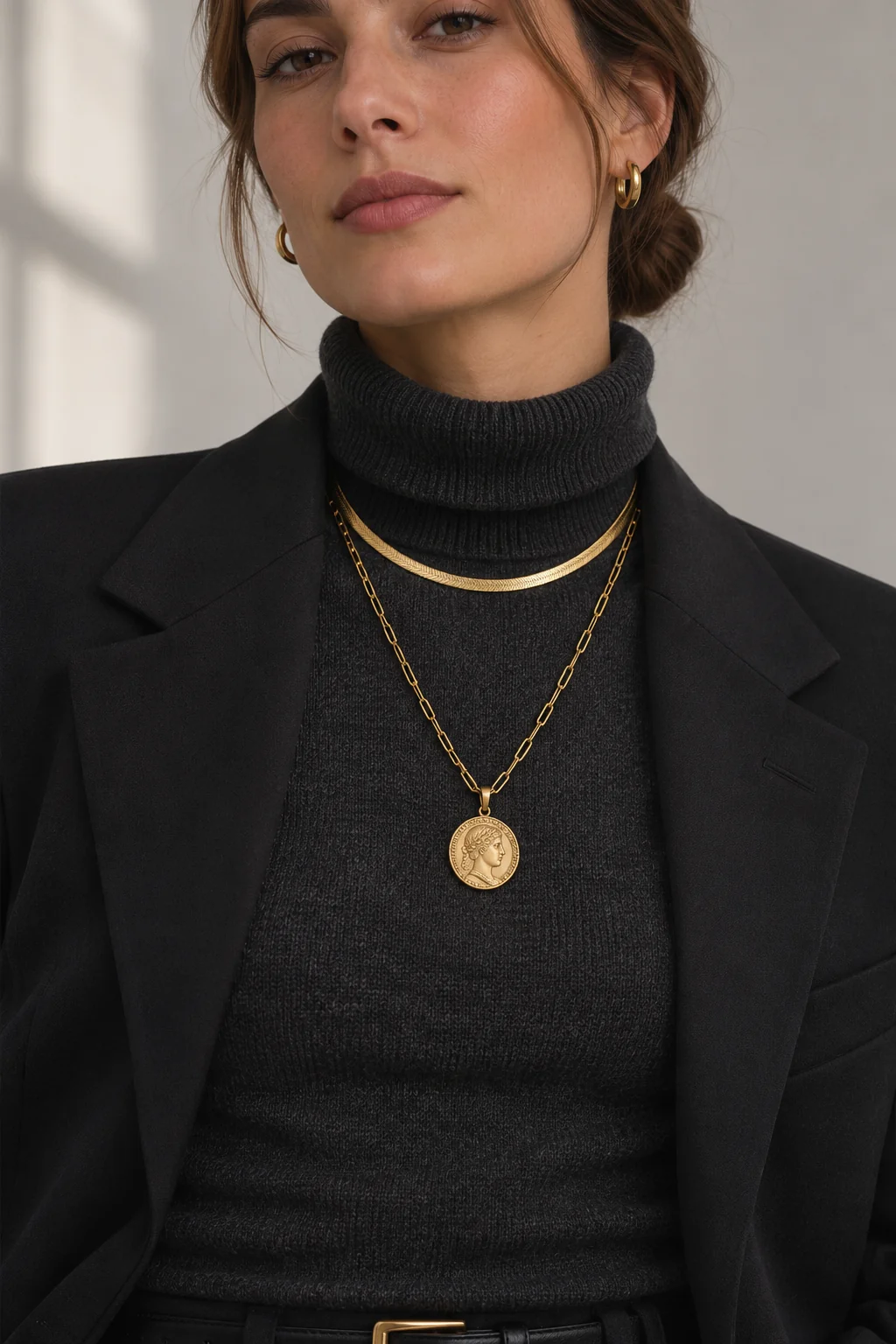
Combination 1: The Modern Minimalist (18-Inch Snake Chain + 22-Inch Paperclip Medallion)
Pair an 18-inch flat snake chain (1.5mm) with a 22-inch paperclip chain (4.0mm) plus an 8-gram coin medallion. This stack shines on black or charcoal merino knits under blazers.
The flat base sits cleanly below rolled wool. Meanwhile, the open paperclip drop forms a shallow V down the front. Grab a layered snake and paperclip coin necklace set for exact color match. Wear this pair for winter date night outfits.
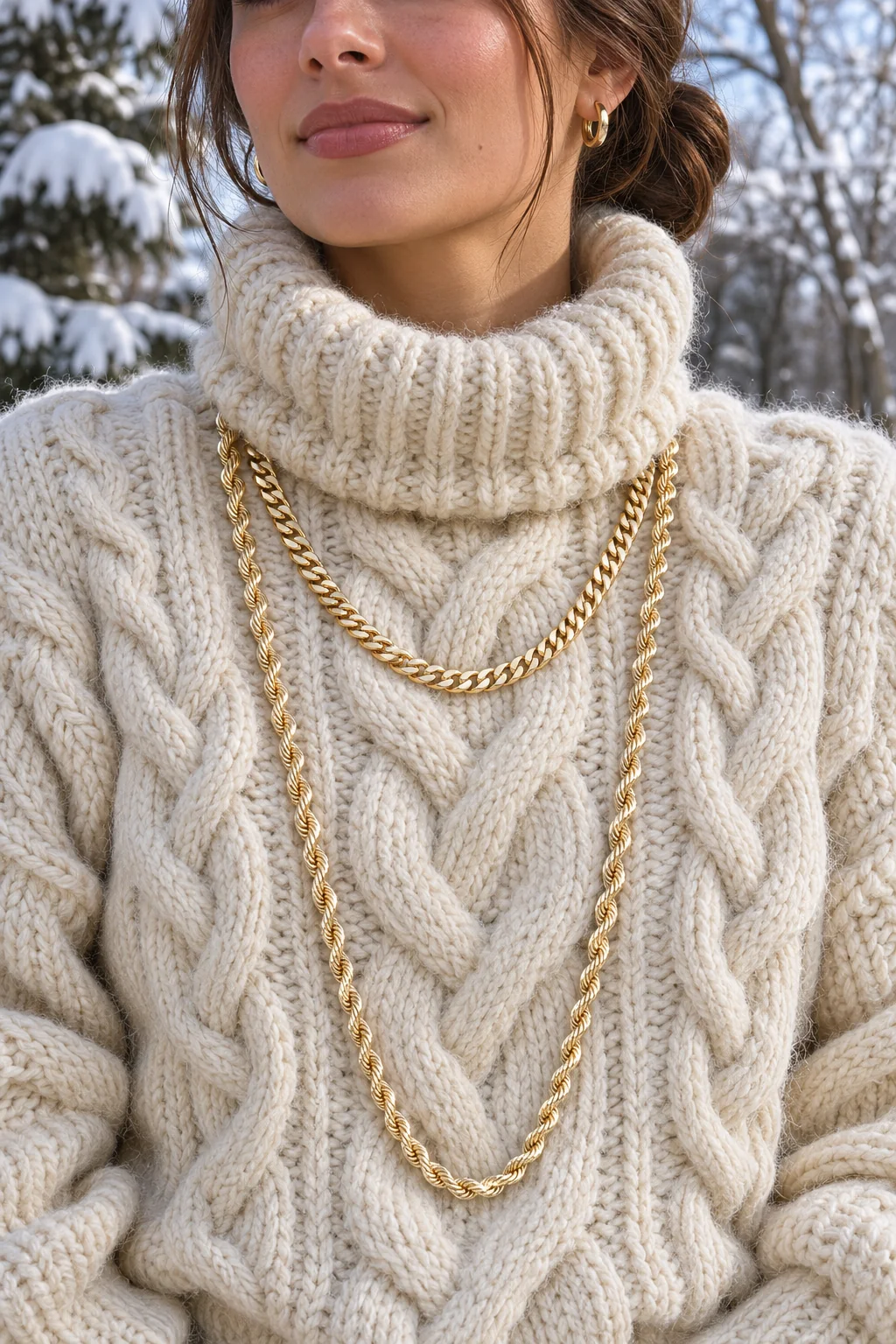
Combination 2: The Chunky Cable-Knit Anchor (24-Inch Heavy Curb + 30-Inch Opera Rope)
Layer a 24-inch heavy Cuban curb chain (5.0mm gauge) above a 30-inch diamond-cut rope chain (3.0mm gauge). Big Fisherman sweaters have thick rope braids that swallow 1mm chains fast. Heavy metal widths stand up cleanly against bulky cream or ivory wool.
Start at 24 inches so heavy strands clear wool cuffs without tugging. The chunky gold curb chain stays high across your chest, while the long rope gleams over thick knit knots.
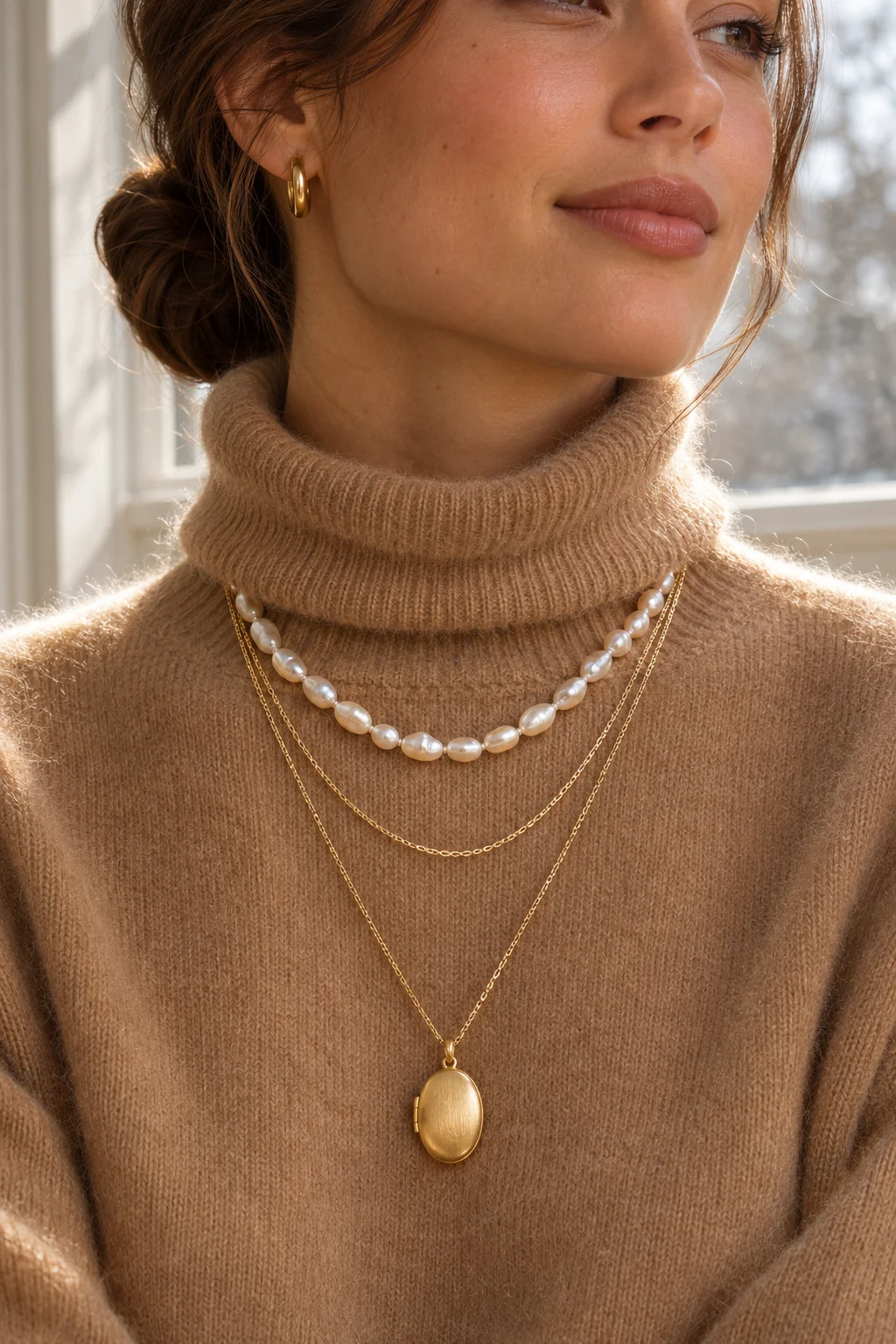
Combination 3: The Pearl and Gold Texture Trio (18-Inch Baroque Pearl + 20-Inch Cable + 24-Inch Locket)
Stack an 18-inch freshwater baroque pearl strand (6mm to 7mm organic pearls) with a 20-inch cable chain (1.5mm) and a 24-inch 10-gram oval locket. Warm pearl luster glows brightly against camel, oatmeal, or espresso cashmere sweaters.
Drop the slim 20-inch gold chain between solid pearls on top and the heavy locket below. Two full inches of drop stops the slim middle strand from flipping up. Check our modern birthstones guide so soft pearls never grind against rough chains at the back clasp.
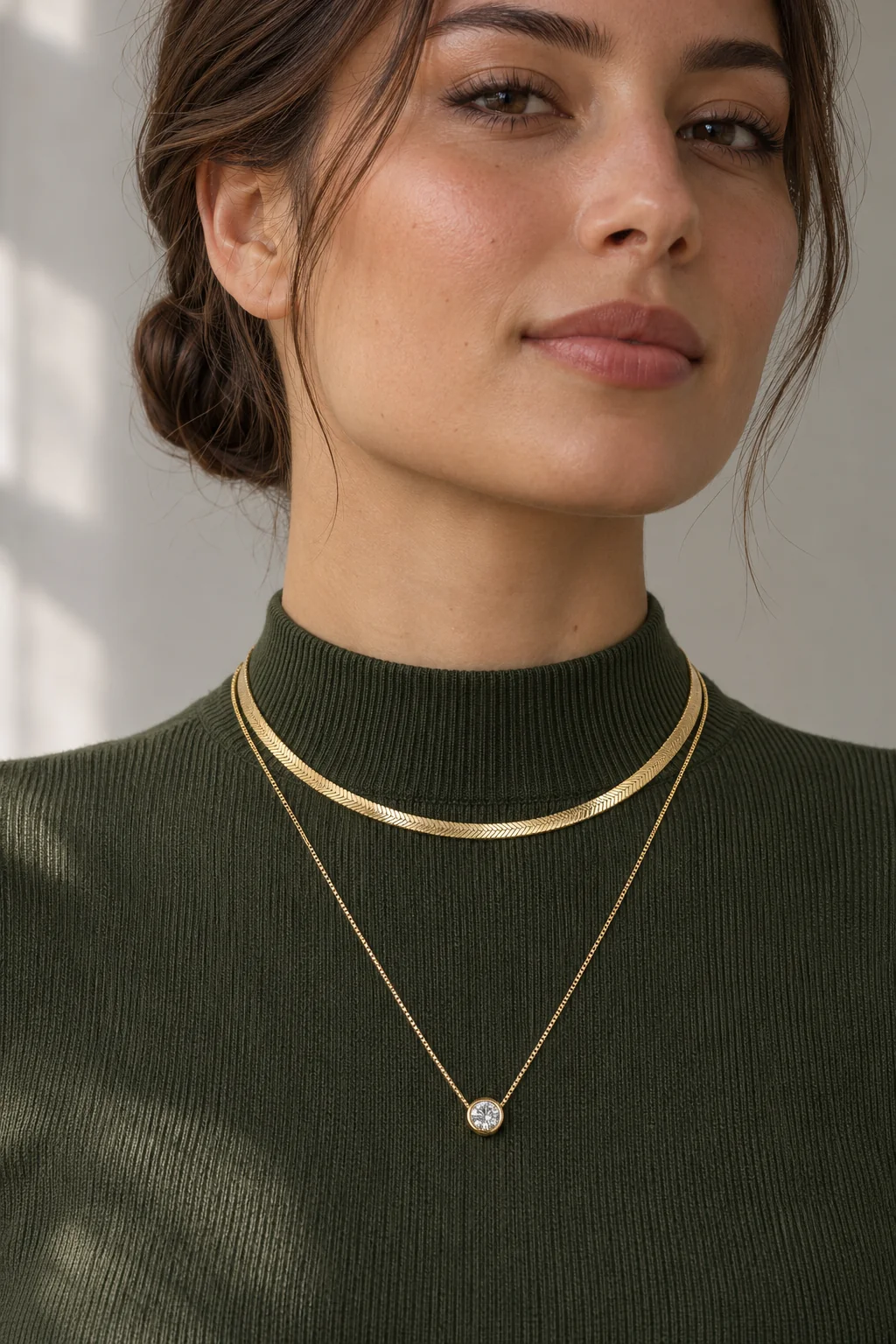
Combination 4: The Mock-Neck Collar Hugger (16-Inch Thick Herringbone + 20-Inch Floating Solitaire)
Wear a 16-inch flat herringbone band (4.0mm width) over a 20-inch fine box chain (1.2mm) with a 1.5-carat bezel solitaire drop. Unfolded mock necks stop two inches up the throat, which leaves space for a snug collar hugger along the collarbone.
The wide herringbone ring brightens your face and breaks up plain solid necklines. Beneath it, a bezel solitaire pendant necklace adds centered shine with smooth metal rims that never snag olive or burgundy sweaters.
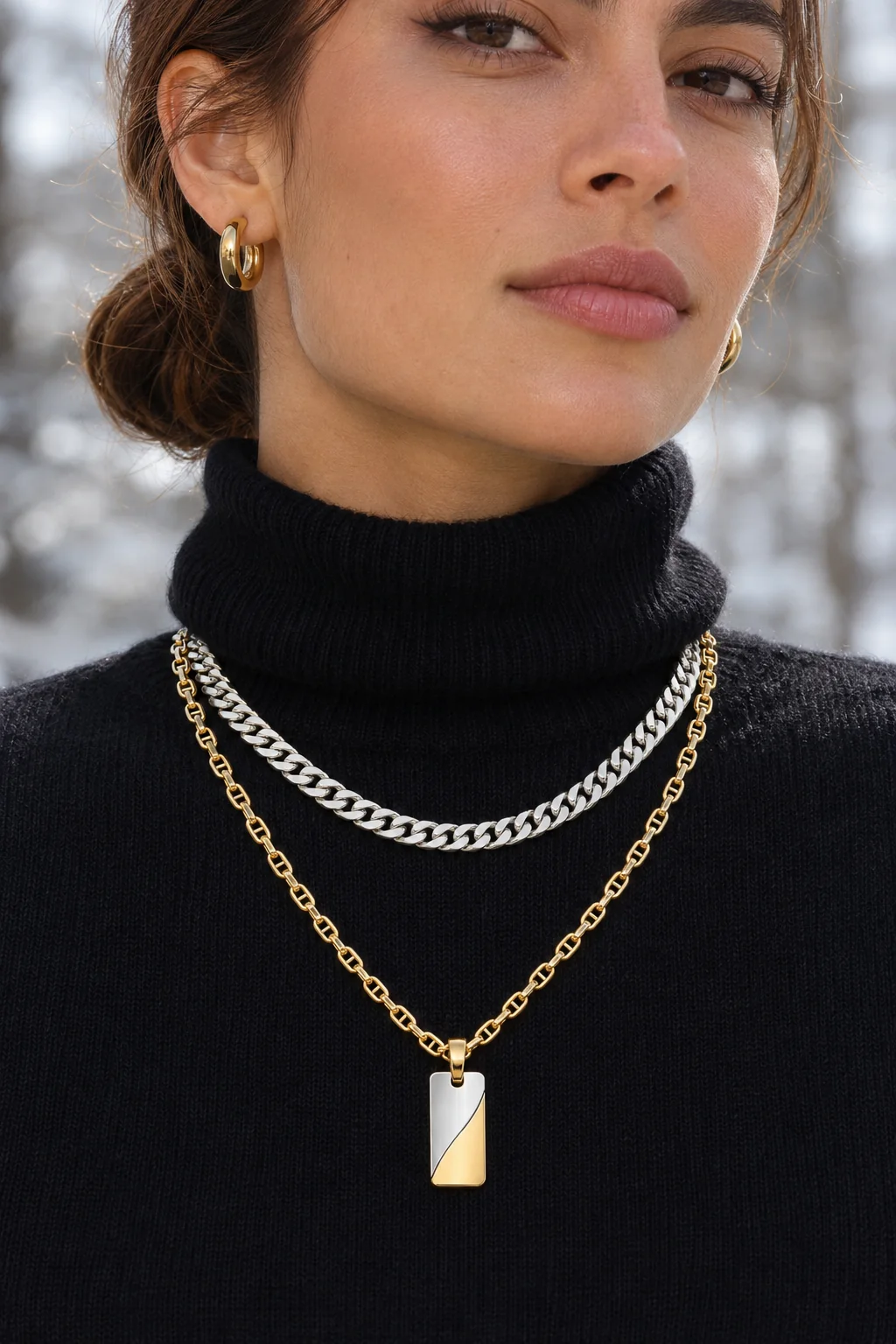
Combination 5: The Mixed Metal Heavyweight (18-Inch Silver Cuban + 22-Inch Gold Mariner Tag)
Pair an 18-inch sterling silver Cuban chain (4.5mm) with a 22-inch gold mariner chain (3.5mm) and a two-tone bar pendant. Bright silver pops starkly on charcoal, black, and navy wool, while yellow gold bridges easily into gold earrings and rings.
Keep an even 50/50 weight balance so mixed metals look planned on dark solids. Flat sterling links align neatly above a structured gold mariner link chain on ribbed knits. This bold pair upgrades everyday black tops into last-minute party outfit formulas fast.
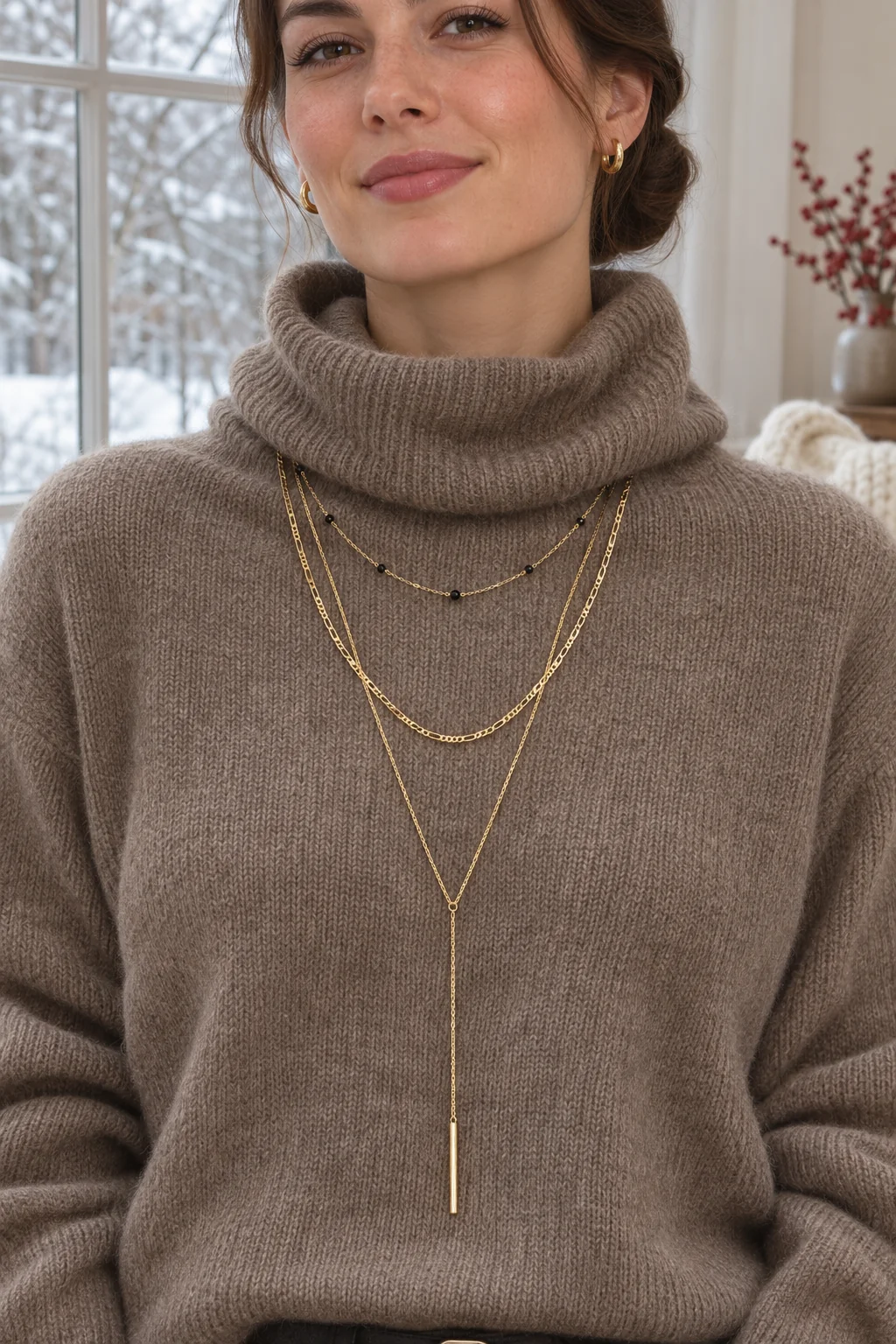
Combination 6: The Longline Bohemian Drop (20-Inch Beaded Rosary + 26-Inch Figaro + 32-Inch Lariat)
Combine a 20-inch black onyx beaded chain with a 26-inch gold Figaro layering chain (2.5mm) and a 32-inch lariat Y-necklace. Boxy winter sweaters can make shorter necks or full busts feel closed in across the chest.
A long 32-inch lariat tail creates a strong V-shape down your sternum. That clean vertical bar draws the eye downward and breaks up heavy wool blocks, while natural stone beads keep upper strands spaced apart.
Knitwear Fabric Guide: Matching Chain Gauges to Sweater Weights
Match your chain width in millimeters to the yarn size of your sweater. Chunky cable and wide-ribbed wool knits need bold 3.5 to 6.0 millimeter links so metal stays visible above deep grooves. Fine cashmere and thin cotton knits need smooth 1.0 to 2.5 millimeter flat links that keep soft wool intact.
Inspect your knit surface first to stop pulled wool loops. Match each sweater type with this quick guide.
| Sweater Knit Type | Yarn Profile | Ideal Chain Gauge | Best Chain Weaves | Settings to Avoid |
|---|---|---|---|---|
| Fisherman Cable Knit | Deep 3D twisted ropes | 4.0 mm to 6.0 mm | Heavy Cuban curb, thick rope, large paperclip | Thin 1mm cable chains that vanish in crevices |
| Wide Vertical Rib Knit | Raised parallel channels | 3.0 mm to 4.5 mm | Weighted medallion on box or mariner chain | Light unweighted charms that drift sideways |
| Fine-Gauge Cashmere and Merino | Tight, soft brushed halo | 1.0 mm to 2.5 mm | Flat herringbone, snake chain, bezel solitaire | Open 4-prong basket settings that snag yarn |
| Smooth Cotton or Modal Tissue Knit | Dense flat stretch weave | 1.2 mm to 3.5 mm | Baroque pearls, Figaro, layered coin trio | Rough unsoldered open jump rings |
Chunky Ribbed and Cable Knits: Heavy Gauges That Won’t Disappear
Thick wool twists sit up to five millimeters deep. Thin hair-fine necklaces vanish into those shadows, look messy, and tug loose loops from heavy braids when your coat shifts.
Pick links measuring 3.5 to 6.0 millimeters wide for coarse wool. Rounded ropes, heavy mariner bars, and flat Cuban curb links bridge over thick ridges instead of falling into gaps.
Fine-Gauge Cashmere and Merino: Smooth Links That Protect Delicate Fibers
Fine cashmere and soft merino have tiny fuzz fibers that catch on sharp pendant prongs and unsealed jump rings. One rough prong tip can pull an ugly snag right across a warm sweater chest.
Wear closed bezel stones, sealed lockets, and sleek flat weaves like herringbone chains. Standards from the Gemological Institute of America note that closed bezel rims encase gemstone edges cleanly and stop fabric pulls. Pair smooth flat links with delicate party sweaters from our Christmas Eve knitwear looks guide.
How to Clean and Store Layered Necklaces After Wearing Over Wool
Wool sweaters coat chain clasps in lanolin wax, static dust, and stray fuzz threads. Soak solid gold or steel chains every two weeks in warm water and mild dish soap for 10 minutes. Pick trapped wool out with tweezers, wipe pearls with a damp cloth, and store herringbone chains flat.
Removing Sweater Lint and Fiber Buildup From Micro-Links
Lint twists into lobster clasp springs and builds up inside magnetic barrel holes. When fuzz packs tight, clasp latches stay half open. Soak solid metal strands for 10 minutes in warm water with two drops of mild dish soap to soften wool wax.
Pull stray wool strands from clasp hinges using sharp tweezers, then brush open links lightly with a soft baby brush. Rinse under cool water and pat dry with microfiber cloth. Care advice from Jewelers of America recommends keeping pearls out of soapy baths and wiping them damp only.
Hanging vs Flat Velvet Storage to Prevent Chain Kinks
Dropping layered chains into a pile creates tight knots overnight. Hang open-link weaves (paperclip, curb, Figaro, rope) straight down on wall pegs spaced one inch apart. Gravity keeps links aligned and stops morning tangles.
Keep flat snake and herringbone chains off narrow wall hooks. Hanging a flat herringbone collar bends its tight brass or gold joints into permanent kinks. Clasp flat chains closed and lay them flat on velvet drawer pads instead.
Frequently Asked Questions About Layering Necklaces on High Necks
Choker clearance, metal contrast on black wool, magnetic spacer strength, and cowl-neck drops spark the main styling questions for winter knits. These direct answers give clear inch cutoffs, quick counterweight tricks, metal matching rules, and safe chain widths for short, mid, and loose high-neck sweaters daily.
Can you wear a choker with a turtleneck?
Only wear a 16-inch choker over a fitted, unfolded mock neck that hugs smoothly below the throat. Skip chokers over rolled 4-inch turtlenecks. Short strands slip under folded wool cuffs, choke your jawline visually, and push awkward lumps outward.
What is the best necklace length to wear over a turtleneck sweater?
An 18 to 20 inch base chain with a 22 to 24 inch middle strand and a 28 to 30 inch bottom pendant fits rolled sweaters best. Those steps clear thick cuffs cleanly by two full inches and trace a sharp slimming shape down your front.
How do I keep my layered necklaces from tangling when wearing knitwear?
Keep two vertical inches between every strand and avoid matching thin gauges. Mix one smooth flat herringbone band with an open paperclip chain, hang a heavy 5 to 15 gram pendant down low, and lock your ends with a magnetic spacer bar.
Do necklace spacer detanglers actually work?
Yes, magnetic barrel spacers hold necklace clasps half an inch apart at your nape so strands cannot braid together. Buy N45 magnetic clasps made from 316L stainless steel or 14K gold vermeil instead of cheap plated zinc so collars stay stain-free.
How do I stop my necklace clasp from sliding to the front of my sweater?
Attach a 1-inch weighted extender charm onto the clasp jump ring so weight pulls back down your spine. For fine chains without tails, slide one clear silicone ear nut behind the clasp loop to grip the sweater collar seam.
Should I wear gold or silver jewelry with a black turtleneck?
Both yellow gold and bright sterling silver stand out starkly on black wool. Pick silver for cool crisp contrast or yellow gold for warm glow. Or stack an 18-inch silver Cuban link over a 22-inch gold mariner chain in an even 50/50 split.
Can you wear delicate chains over a chunky cable-knit sweater?
No, hair-thin 1 millimeter chains sink right inside deep cable loops and catch wool yarns when your coat shifts. Swap to heavy 3.5 to 6.0 millimeter curb, thick rope, or bold paperclip links on thick sweaters, and keep thin chains for tight cashmere.
How do I style necklaces on a loose cowl-neck sweater?
Skip 16 to 22 inch chains since draped cowl folds swallow short charms whenever you sit down. Wear one bold 28 to 32 inch opera chain or a single longline lariat Y-drop with a heavy bar resting below the lowest drape curve.