Winter Lip Care Routine: 7 Practical Steps to Stop Peeling, Cracked Lips

Disclosure: This post contains Amazon affiliate links. If you buy through these links, StyleRole earns a small fee at no extra cost to you.
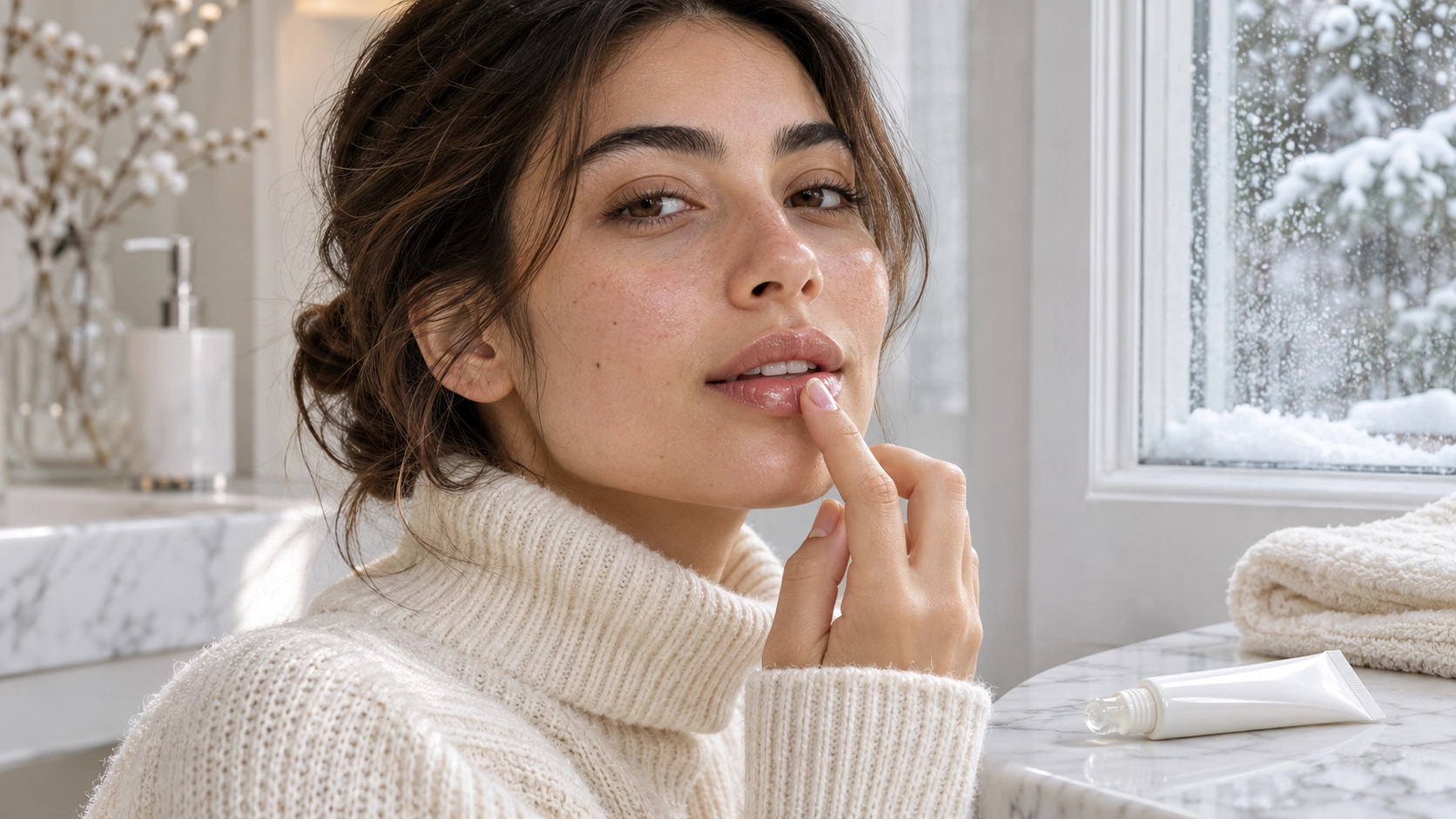
A simple winter lip care routine starts with a fragrance-free balm you can reapply throughout the day. Use plain petroleum jelly when your lips feel especially dry, and wear a broad-spectrum SPF 30+ lip balm outdoors. Give sore lips a break from scrubs, picking, and products that sting.
Quick-Shop: 6 Winter Lip Care Essentials
Optional Amazon picks for your winter routine
Aquaphor Healing Ointment
Contains 41% petrolatum, plus panthenol, glycerin, and lanolin alcohol.
CeraVe Healing Ointment
A fragrance-free ointment with 46.5% petrolatum, ceramides, and hyaluronic acid.
Vaseline Lip Therapy Original
A petrolatum-based balm for dry lips. Check the exact package for ingredients.
La Roche-Posay Cicaplast Lips
A lip balm formulated with panthenol and lipids.
Sensodyne Pronamel Toothpaste
The U.S. Daily Protection Mint Essence label lists no SLS. Check the package for your variant.
Levoit Cool Mist Humidifier
A cool-mist option for a dry bedroom. Use a separate humidity gauge if needed.
If your lips feel tight again between applications, check what you’re using and how often you lick or pick at dry skin. A short routine you can repeat is more practical than stacking several products.
Why Lips Get Dry in Winter
Cold wind and dry indoor air can leave lips feeling tight and flaky.
Indoor humidity varies by home. If heated rooms feel especially dry, a humidity gauge can help you decide whether to use a humidifier.
A scarf can help cover your lips on windy walks, including when you’re heading out in winter date night outfits.
Three Habits and Products That Can Irritate Lips
Lip licking, irritating balm ingredients, and reactions to toothpaste can all make chapping harder to manage.
Why Lip Licking Can Make Dryness Worse
Licking may feel soothing for a moment, but repeated wetting and drying can irritate the lips and surrounding skin.
When you catch yourself licking your lips, reach for a bland balm instead.
What Stinging or Tingling Can Mean
Menthol, camphor, and some flavorings can irritate already chapped lips.
The American Academy of Dermatology recommends switching away from any product that makes your lips sting, burn, or tingle.
When Toothpaste Irritates Your Lips
If irritation is strongest around your mouth or after brushing, check your toothpaste label.
DermNet identifies sodium lauryl sulfate (SLS) as a potential irritant. Flavorings can also trigger contact allergy, so an SLS-free label alone doesn’t rule out a reaction.
The 7-Step Winter Lip Care Routine
Start with a bland balm and sun protection. Use the other steps where they fit, such as checking toothpaste if brushing stings or adding a humidifier if your room is dry.
Step 1: Keep Cleansing Gentle
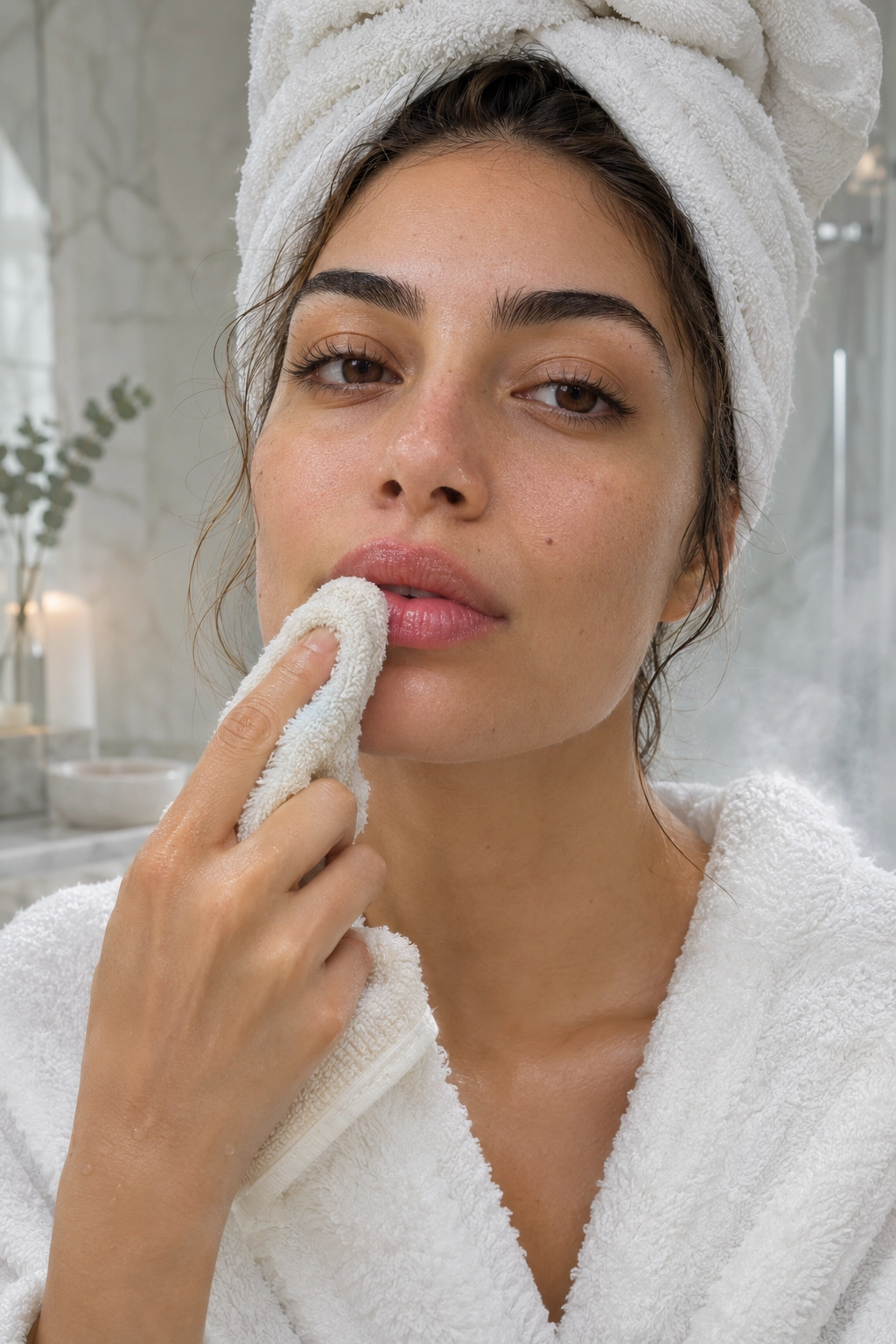
Leave flakes alone, especially when your lips are cracked or sore. Scrubbing and picking can make irritation worse.
If you need to clean your lips, gently dab with a soft, damp cloth. Avoid rubbing the flakes off.
Step 2: Apply a Bland Lip Balm as Needed
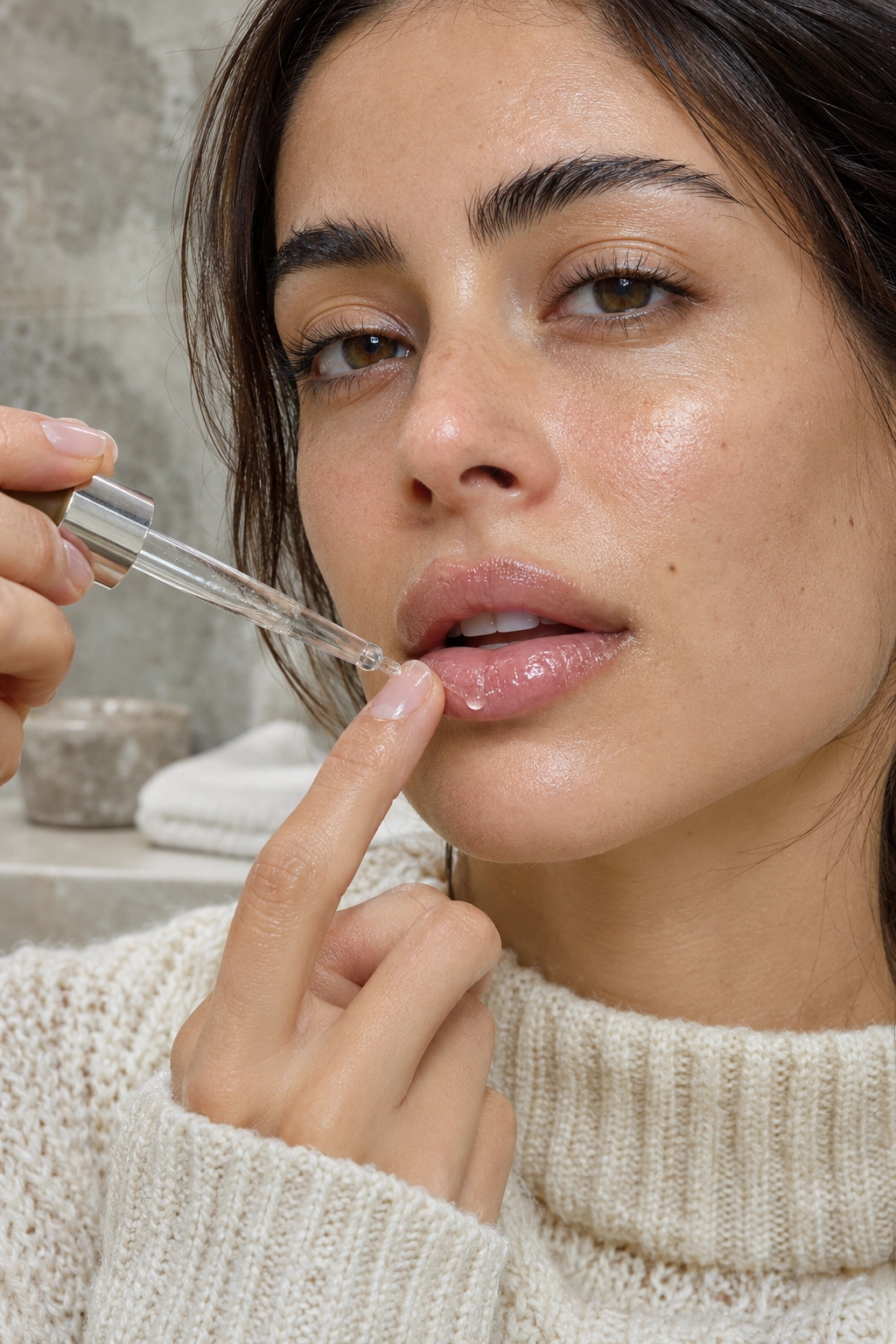
Plain petroleum jelly helps slow moisture loss and can be applied whenever your lips feel dry.
If you prefer a lighter texture during the day, choose a fragrance-free product intended for lips. A separate facial serum is unnecessary.
Step 3: Choose an Ointment if You Prefer a Thicker Texture
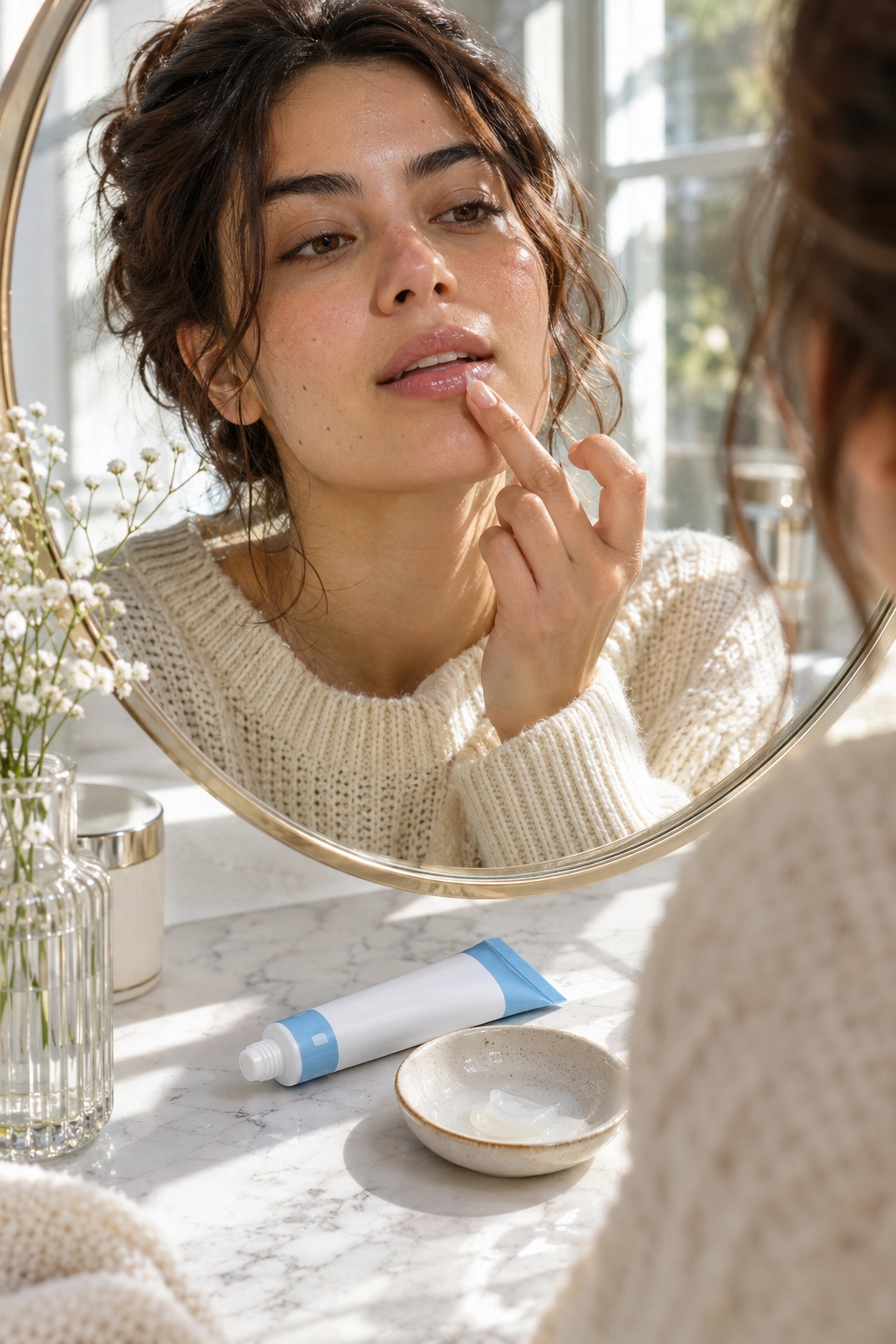
A plain, fragrance-free lip balm may be enough. If you prefer an ointment with ceramides, use a thin layer as needed.
CeraVe Healing Ointment already contains petrolatum, ceramides, and hyaluronic acid, so a separate ceramide layer is optional.
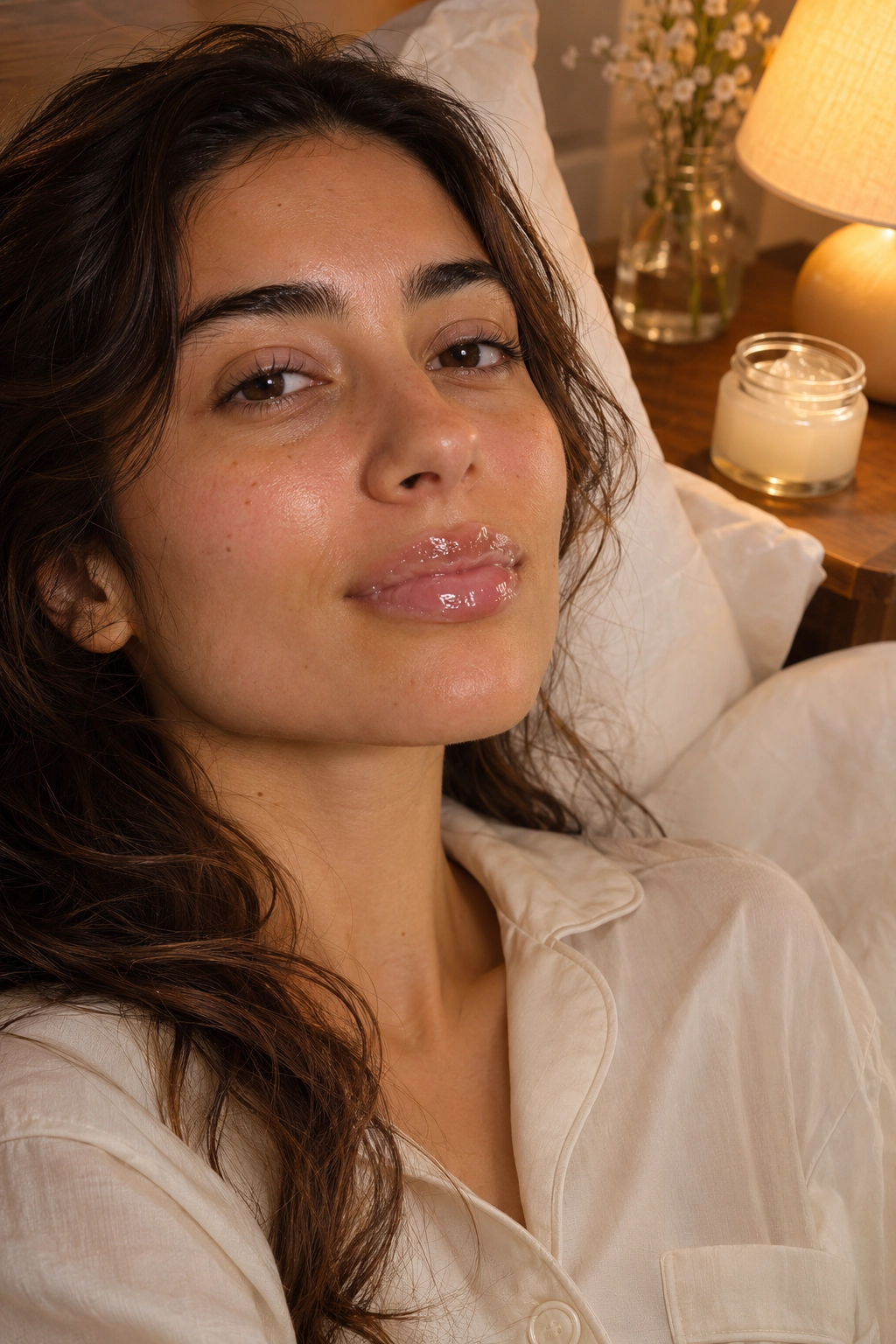
Step 4: Use Plain Petroleum Jelly at Bedtime
Apply plain white petroleum jelly before bed if your lips feel dry. Its thicker texture helps retain moisture.
Aquaphor Healing Ointment also contains lanolin alcohol. If lanolin irritates your lips, check labels and choose plain white petrolatum.
The AAD lists lanolin among the ingredients to avoid while lips are chapped.
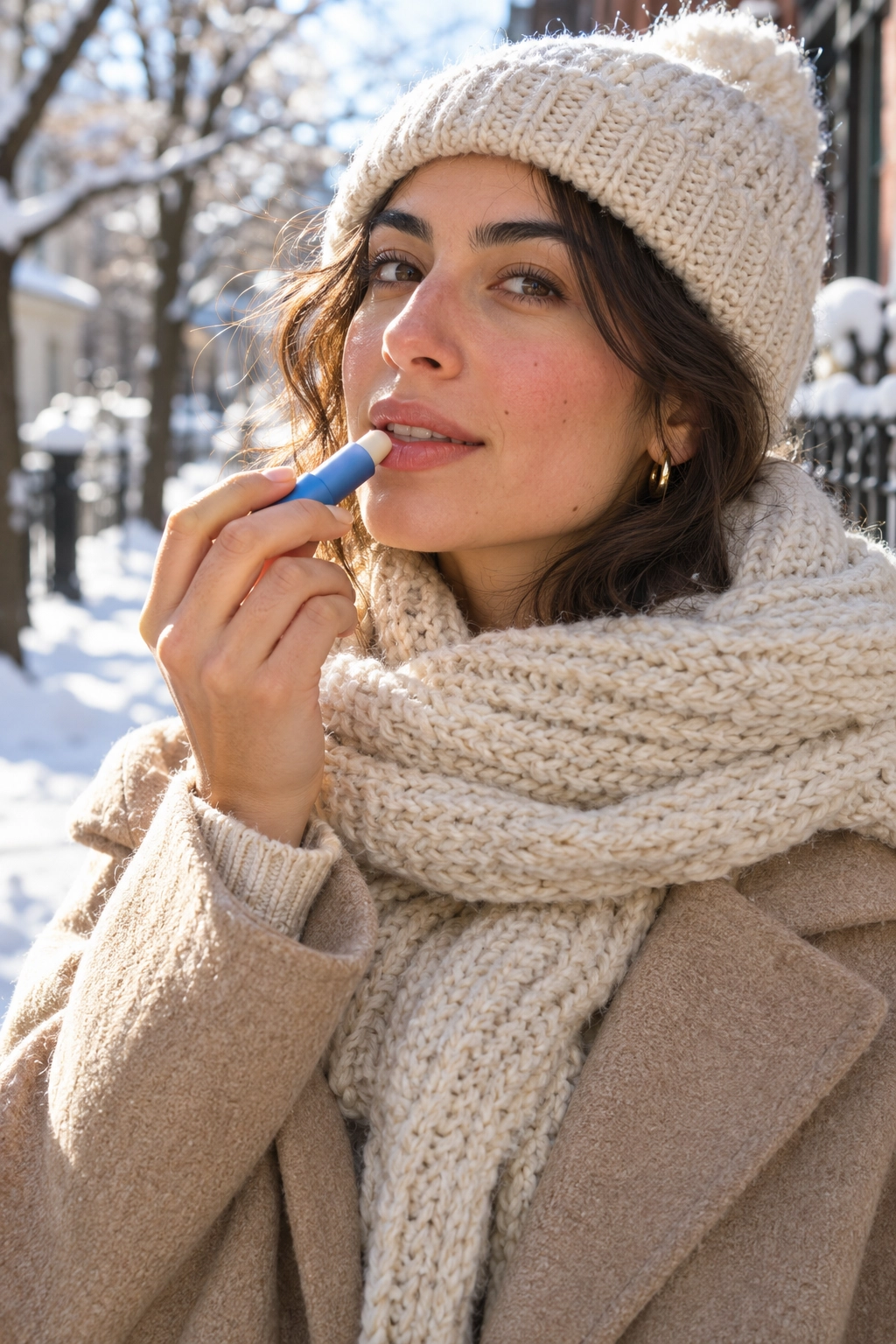
Step 5: Wear Broad-Spectrum SPF 30+ Outdoors
Snow can reflect UV, so keep sun protection handy on bright winter days.
Choose a broad-spectrum SPF 30+ lip balm. Apply before heading out and reapply at least every two hours outdoors, whether you’re dressing for Christmas Eve or taking photos in winter wedding guest outfits.
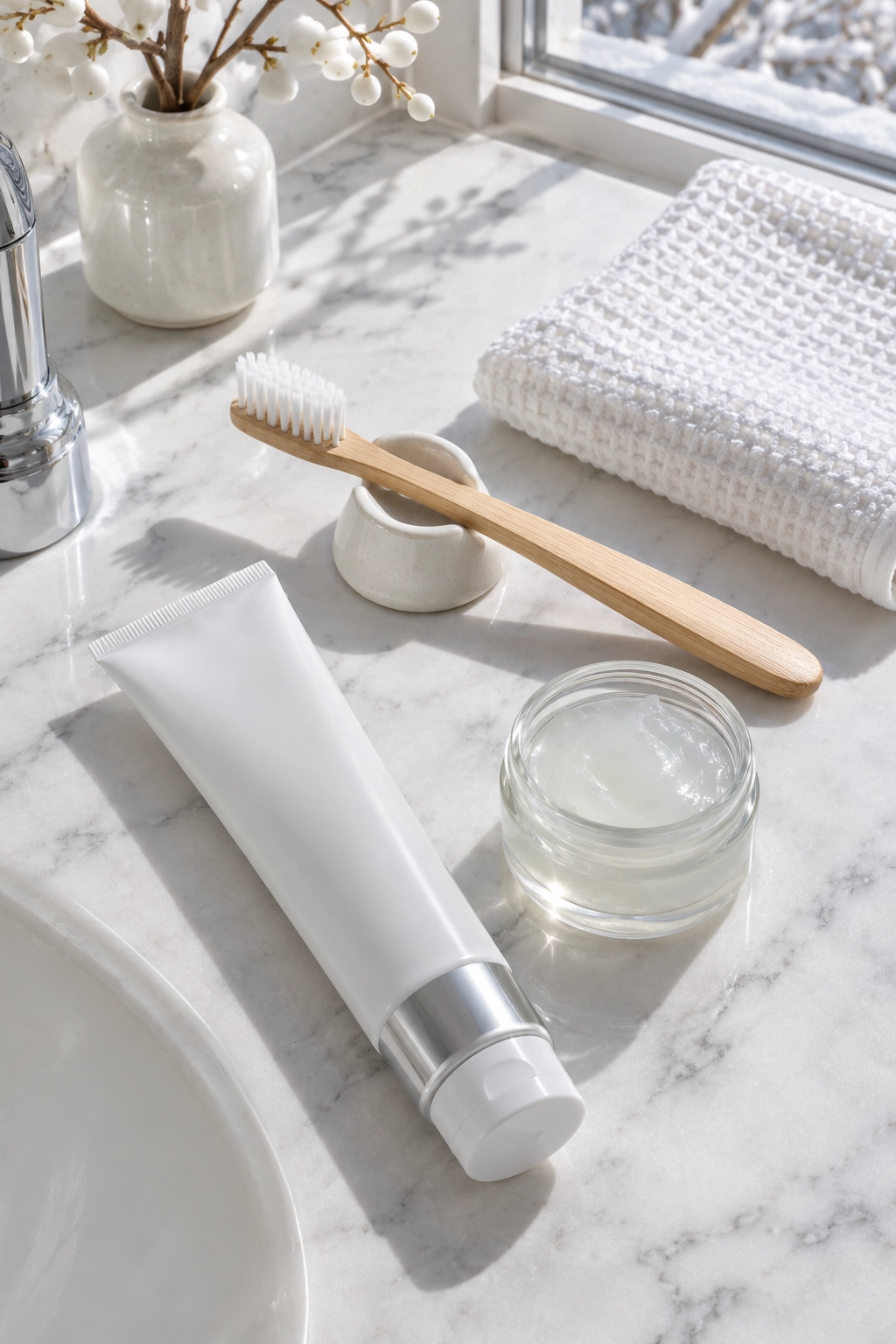
Step 6: Avoid Lip Licking and Check Your Toothpaste
Keep a bland balm handy and apply it when you notice the urge to lick your lips.
If toothpaste seems to irritate the skin around your mouth, you can try a fluoride toothpaste without SLS, such as the U.S. Pronamel Daily Protection Mint Essence formula. Check the exact label and ask a dentist or dermatologist if irritation persists.
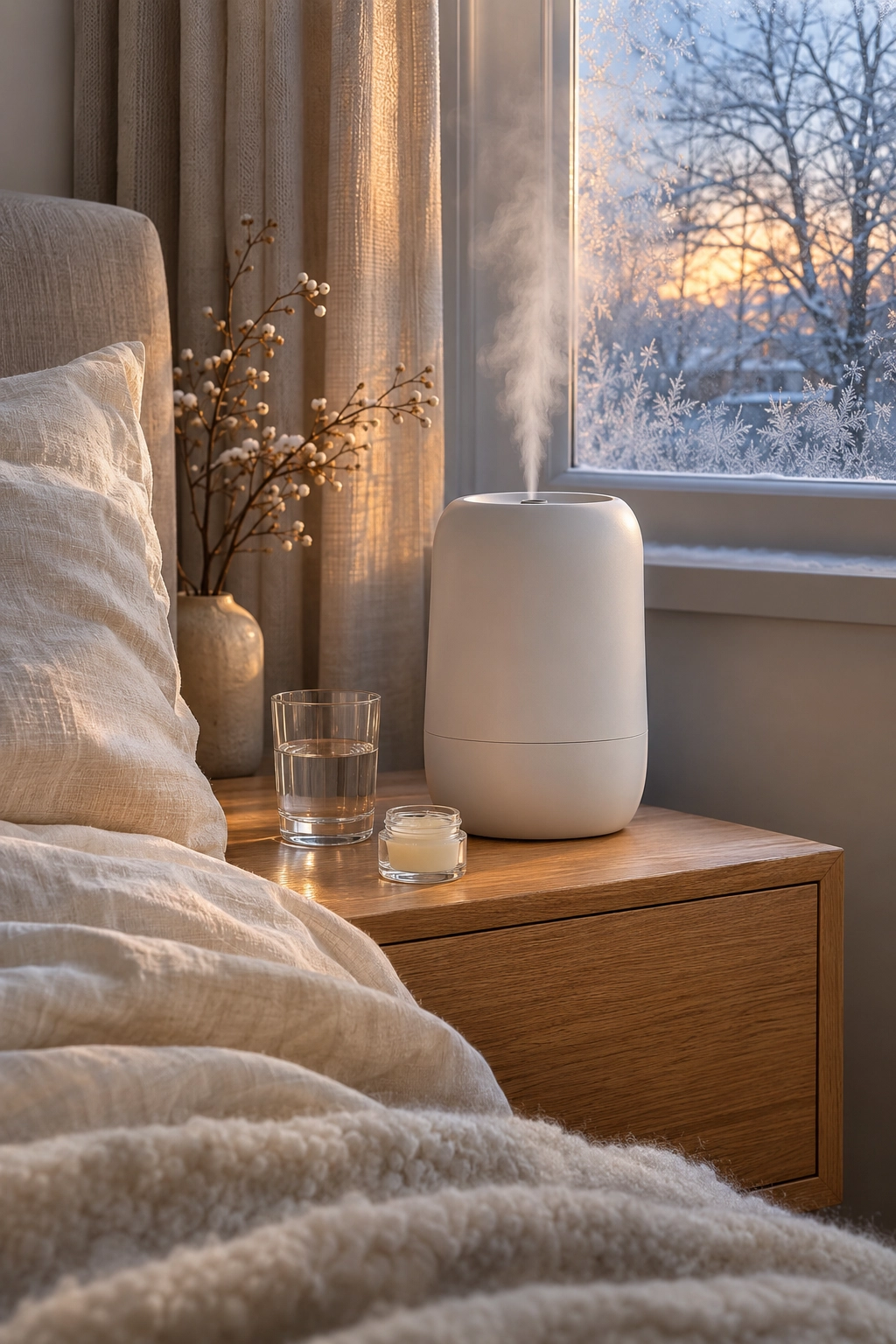
Step 7: Use a Humidifier if Your Bedroom Is Dry
A portable humidifier can help if your bedroom air is dry, particularly if you breathe through your mouth at night.
Use a humidity gauge and stay at or below 50% relative humidity. The EPA advises emptying and refilling portable units daily and cleaning them every third day. Follow the manufacturer’s instructions. For windy days, see these winter styling tips for layering with a scarf.
Winter Lip Product Matrix: Healing Ointments vs. Stick Balms
A thick ointment can retain moisture longer than a waxy balm. For daily use, choose the texture you’ll reapply and ingredients your lips tolerate.
| Product Type | Main Base | What It Does | Ingredient Notes | Best Winter Use |
|---|---|---|---|---|
| Plain white petrolatum | Petrolatum | Helps retain moisture | Simple ingredient list | Dry lips or bedtime |
| Aquaphor Healing Ointment | 41% petrolatum, glycerin, panthenol | Forms a protective layer | Contains lanolin alcohol | If you already tolerate it |
| CeraVe Healing Ointment | 46.5% petrolatum, ceramides, hyaluronic acid | Forms a protective layer | Check the label for personal triggers | If you prefer a ceramide ointment |
| Fragrance-free stick balm | Varies by formula | Can help retain moisture | Check for flavors and other triggers | Easy daytime reapplication |
How to Prep Dry Lips for Lipstick
Before lipstick, apply a thin layer of bland balm and blot the excess. A cream or satin finish can make flakes less noticeable.
For holiday parties or New Year’s Eve outfits, prep your lips while you do the rest of your makeup.
- Apply a thin layer of balm: Give it a few minutes to settle while you do your eye makeup.
- Blot once: Press a plain tissue flat on your lips to lift slip oil. Leave the plump, soft base behind.
- Pick satin or cream color: Swipe on a cream bullet lipstick, tinted balm, or soft lip oil. Deep berry and dark rose tones look rich in winter light and glide right over texture.
- Pack your pocket: Slip a plain ointment tube next to your lipstick so you can seal lips after meals or cold walks in Thanksgiving outfits.
Frequently Asked Questions About Winter Lip Care
How long do chapped lips take to improve?
The AAD notes that ordinary chapping often improves within 2 to 3 weeks with gentle care. See a dermatologist if it hasn’t improved by then or if symptoms worsen.
Is petroleum jelly safe for daily use on lips?
Plain white petroleum jelly is an option for daily use on dry lips. Apply as needed, especially before bed.
Why does my lip balm make my lips tingle?
Stinging, burning, or tingling can signal irritation. Stop using that balm and try a bland, fragrance-free alternative.
What causes cracks at the corners of the mouth?
Cracks at the corners can be a sign of angular cheilitis. Saliva irritation is common, and infection or nutrient deficiencies can also contribute. If the cracks persist or recur, a clinician can help identify the cause. DermNet.
