How to Stack Rings Without Them Spinning: 7 Bench-Jeweler Rules That Work

Disclosure: This post contains Amazon affiliate links. If you buy through these links, StyleRole earns a small fee at no extra cost to you.
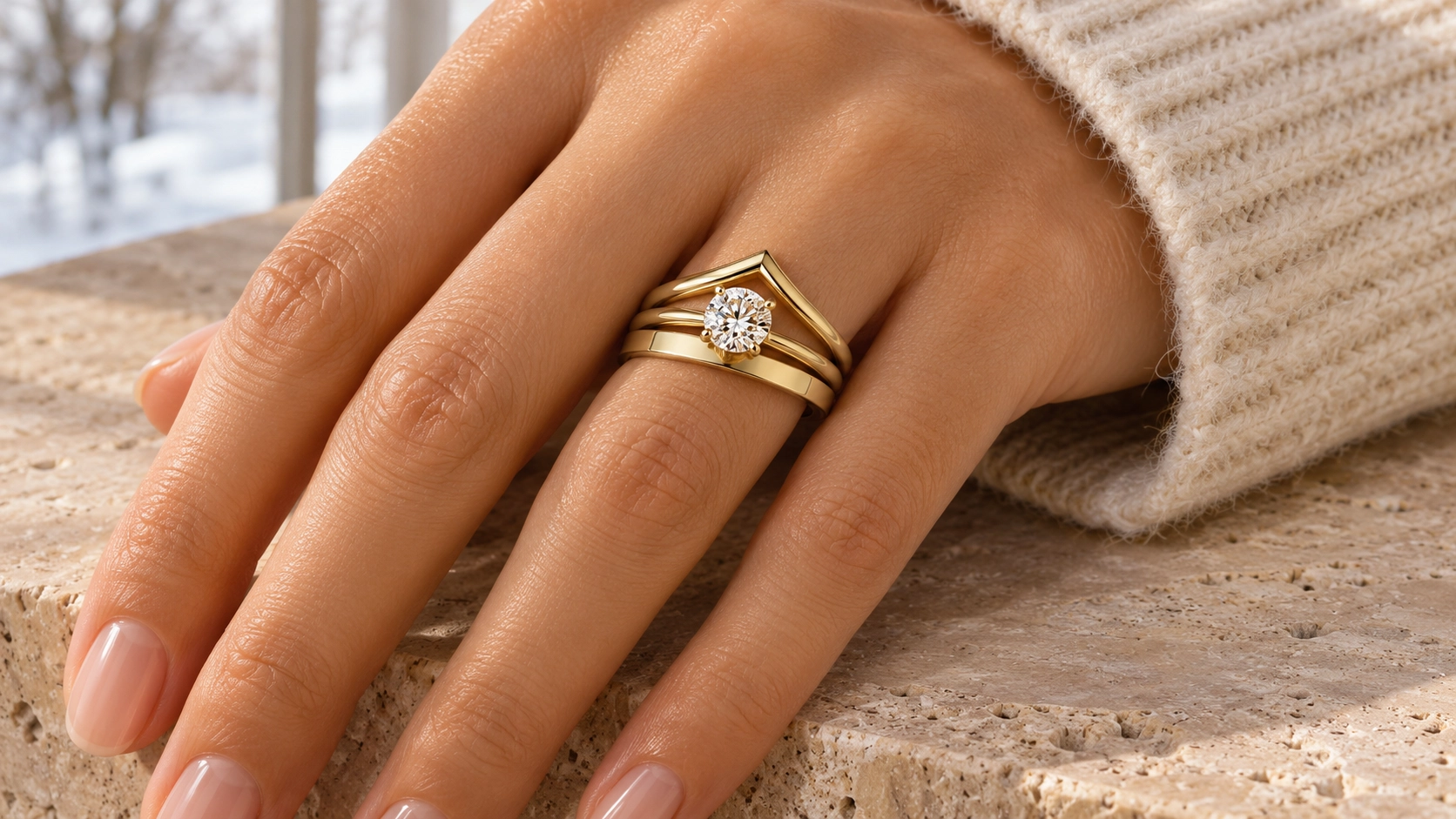
Learning how to stack rings without them spinning comes down to three physical anchors. Seat your widest flat band at the base of your finger, lock any top-heavy stone under a curved chevron band, and finish with a snug top ring or clear silicone adjuster. This setup adds skin friction and blocks gravity from rolling stones into your palm.
Quick-Shop: 9 Anti-Spin Ring Stacking Essentials
Curated for the 7 Bench-Jeweler Rules (Amazon Picks)
Invisible Silicone Ring Adjusters
Clear spiral coils grip loose shanks in cold weather without metal resizing.
Clip-On TPU Ring Guards
Clear inserts can take up extra room inside a loose band. The fit depends on the insert and the ring.
2mm 14K Gold Comfort Fit Band
Solid flat-edge base band adds skin contact friction to stop stack roll.
V-Shape Chevron Stacking Ring
Curved wishbone profile nests flush around solitaires to block side tipping.
1mm Plain Gold Filled Spacer Band
Ultra-thin smooth barrier stops diamond girdles from chewing gold shanks.
Dainty Beaded Stacking Band
A comfortable top band may help keep neighboring rings in place.
2mm Pave Eternity Stacking Band
Balanced all-around weight stays centered even if your finger shrinks slightly.
US Ring Sizer Measuring Set
Measure both your knuckle and base at home before buying stack bands.
Glazed Ceramic Ring Dish
Keep stacked bands organized and scratch-free next to your sink or bed.
You glance down at your hand during dinner and your center stone sits buried in your palm. You twist it back up. Five minutes later, it flops sideways again. Most wearers assume their ring is simply too big and rush to size it down. Then the band refuses to slide past their knuckle.
Why Your Ring Stack Flips Into Your Palm
A ring can spin if your knuckle is wider than the spot where the band sits. The band needs room to pass over the joint, so it may sit loosely at the base of your finger. A heavy center stone can then tip toward your palm.
Three physical forces work against a loose stack every day:
- Knuckle-to-base gap: Your proximal interphalangeal (PIP) joint acts like a gate. Once your ring passes that wider joint, it drops onto a narrower finger base with room to roll.
- Top-heavy torque: High prongs, big halos, and solitaires over 1.5 carats sit far above your finger bone. Every time you type, grab a coffee cup, or swing your arm, that extra top weight flips the ring upside down.
- Winter cold shrinkage: Cold air narrows blood vessels in your hands. Your fingers shrink by up to half a ring size between July and January. A stack that sits tight in August suddenly spins nonstop when you step out in winter date night outfits or dress for Christmas Eve outfit ideas.
According to the GIA, a ring should slide over your knuckle and sit securely enough that it will not slip off during everyday wear. If the knuckle and the base differ noticeably in size, ask a jeweler to check the fit.
7 Proven Rules to Stack Rings Without Them Spinning
Follow these seven bench-jeweler rules in exact order from your finger base up to your knuckle. Combine proper cumulative band width, a heavy anchor base, a curved solitaire cradle, a thin scratch spacer, and a snug top cap. Add clear silicone coils or permanent sizing beads for big knuckle gaps.
Rule 1: Check the Fit of the Full Stack
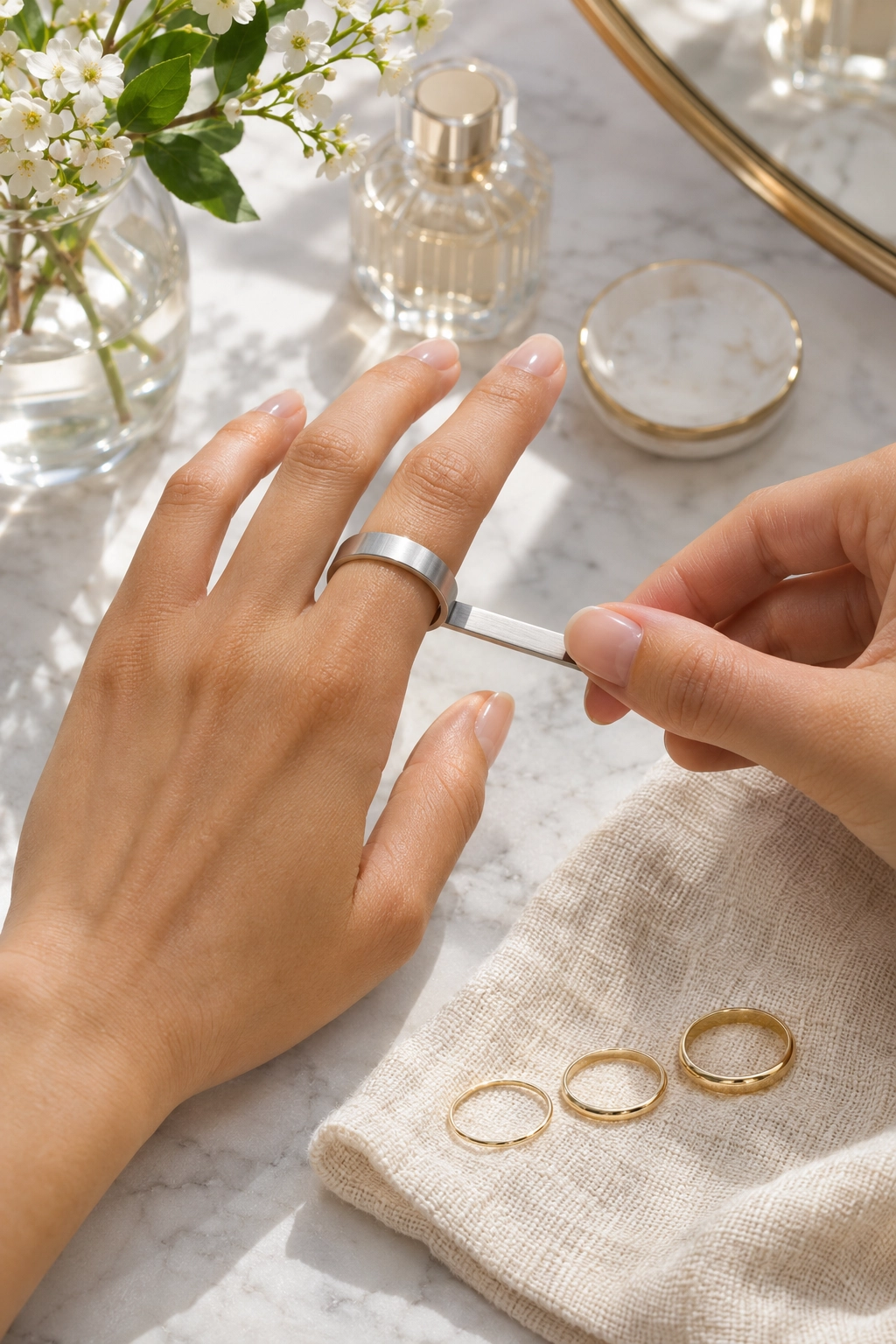
A stack can feel snugger than any one of its rings worn alone. GIA notes that wider bands tend to fit more snugly and that wider bridal sets may need a separate fit check.
Use a US Ring Sizer Measuring Set as a starting point, then try on the full stack. Check that it clears the knuckle and feels comfortable when you bend your finger.
Rule 2: Seat Your Widest, Flattest Band First as the Base Anchor
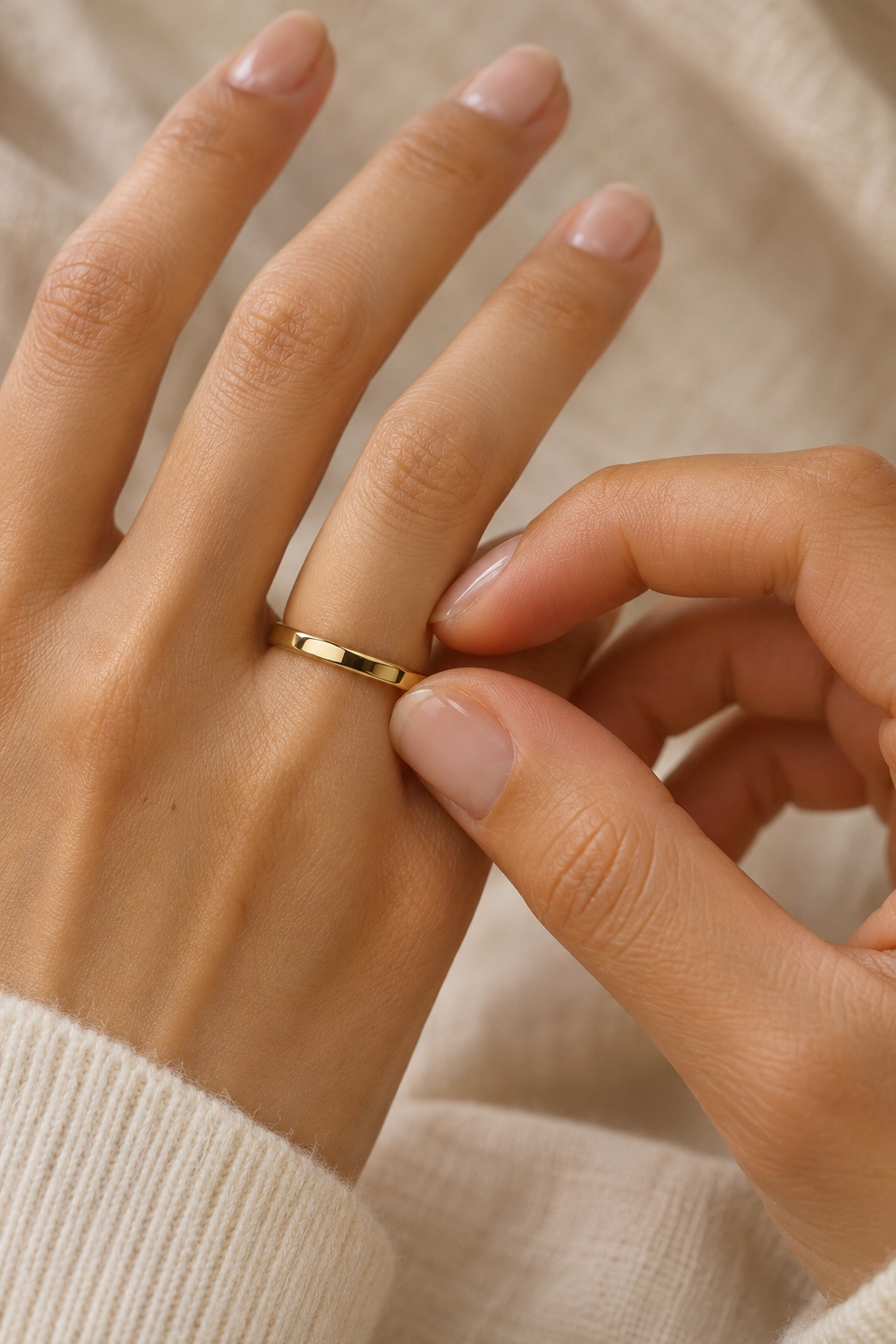
Thin 1mm bands bend and roll when you place them at the bottom of a stack. Your foundation needs mass and flat wall edges. Always put your widest, heaviest plain band on first so it sits closest to your palm.
A 2mm to 3mm flat or comfort-fit shank like a 2mm 14K Gold Comfort Fit Band acts like a brake pad against your finger base. This also matches traditional engagement ring symbolism, where the solid wedding band sits closest to your hand and stabilizes the engagement ring above it.
Rule 3: Lock Top-Heavy Stones Inside a Chevron Cradle Sandwich
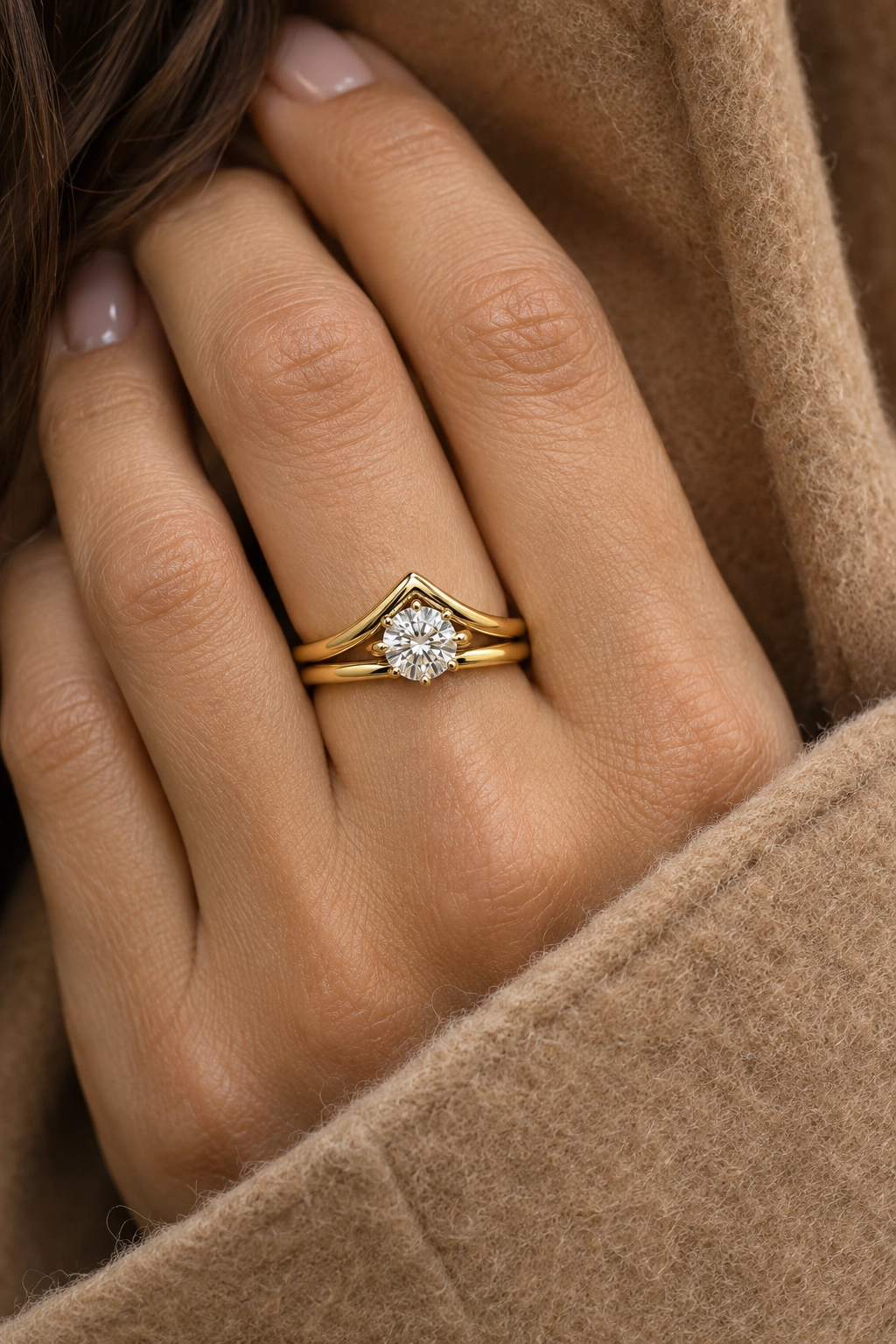
A tall solitaire hates flat neighbors. When a straight band presses against a raised basket setting, it leaves an awkward gap and acts like a pivot bar that makes your center stone roll faster.
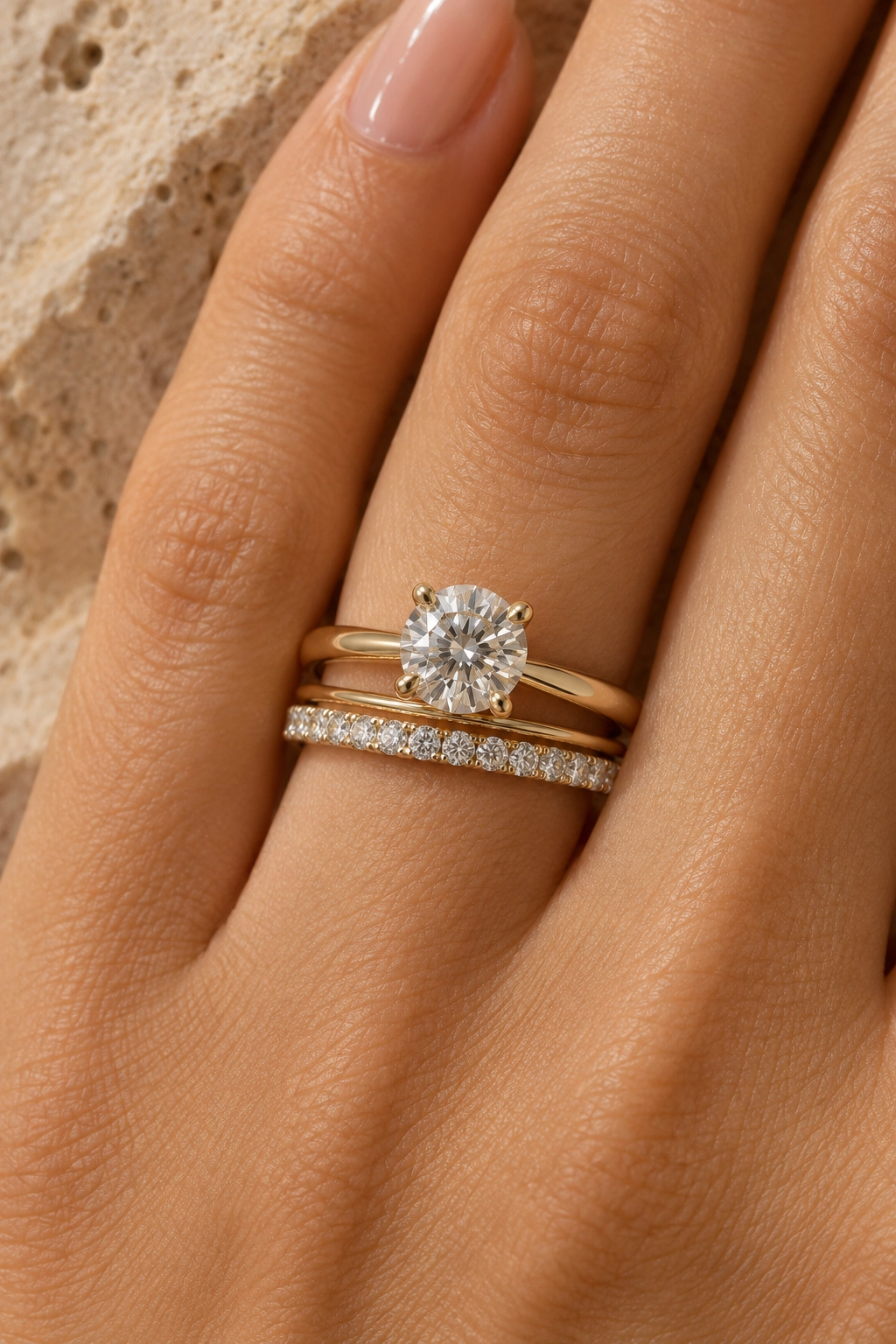
Fix that tilt with a cradle sandwich. Place your flat anchor band below the solitaire, then slide a curved V-shape wishbone ring on top pointing down around the stone. A V-Shape Chevron Stacking Ring hugs both sides of the setting head and builds two physical bumpers. Your diamond stays upright even when you pose for close-up photos in engagement picture outfits.
Rule 4: Drop a 1mm Plain Spacer Between Diamonds and Gold Shanks
Stacked diamond eternity bands look bright, yet exposed stone edges carry a hidden hazard. Diamonds rank 10 on the Mohs hardness scale. Gold and platinum alloys rank between 2.5 and 4. When two stone-set rings rub together all day, hard diamond girdles saw deep notches right into your solitaire prongs.
Slide a smooth 1mm Plain Gold Filled Spacer Band between any pave band and your center ring. That thin metal buffer stops metal galling, fills micro-gaps under low settings, and adds extra friction to calm down spinning. If you are still shopping and reading up on buying an engagement ring on a budget, add a $20 plain spacer to your cart on day one to protect your prongs.
Rule 5: Cap the Stack With a Snug Top Locking Band
If an heirloom ring or vintage solitaire moves around, try adding a thin top band that feels snug and comfortable. Ask a jeweler to inspect an antique setting before altering it.
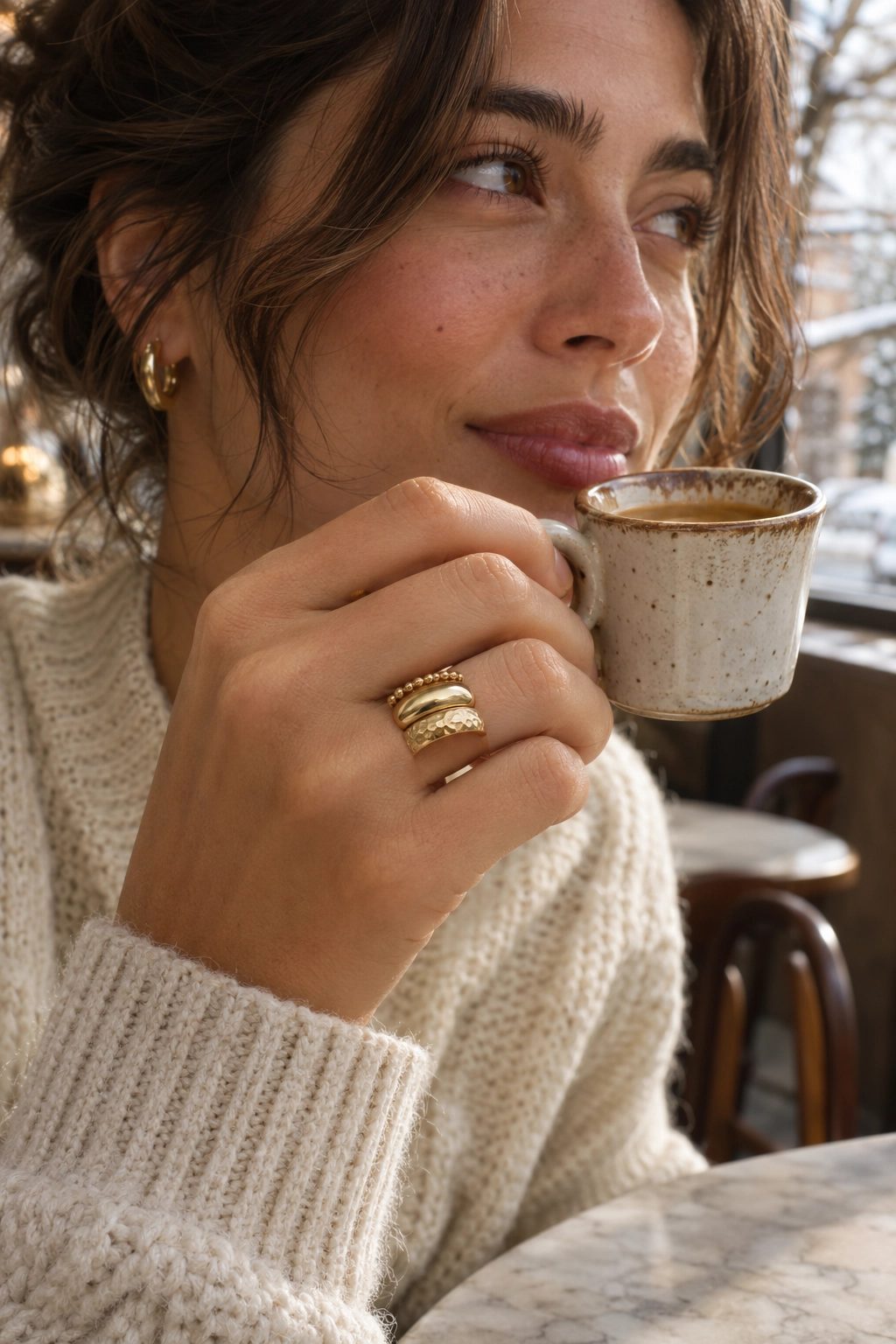
A snug Dainty Beaded Stacking Band may help limit movement. Try it with the full stack and make sure it clears the knuckle and comes off without force. If you plan to wear it with winter wedding guest outfits, check the fit before you head out.
Rule 6: Coil an Invisible Silicone Adjuster for Winter Shrinkage
If your ring mainly feels loose in cold weather, a removable adjuster is an option worth trying before you consider resizing.
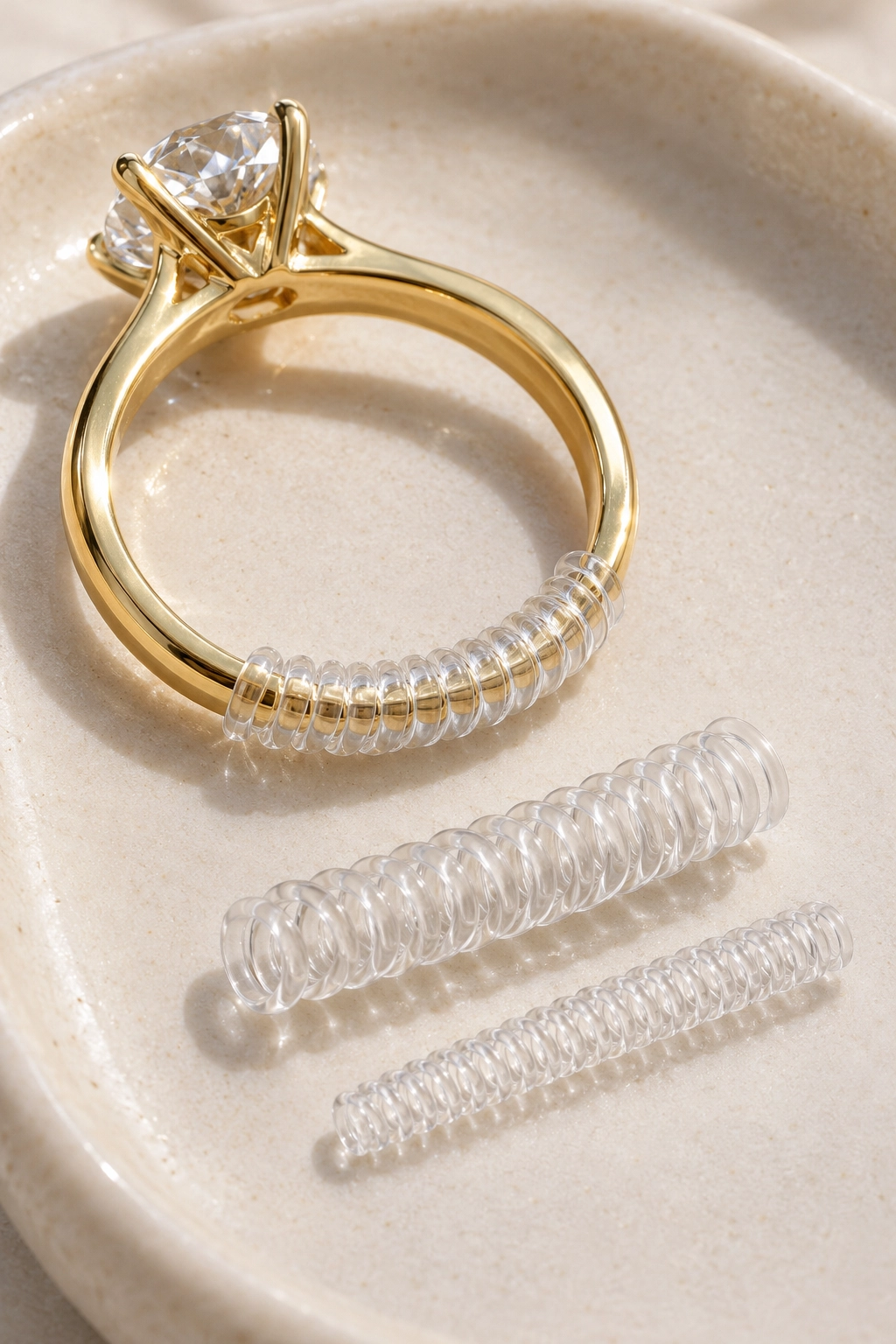
Wrap two to four loops of Invisible Silicone Ring Adjusters (often called ring noodles) around the bottom shank, or snap in Clip-On TPU Ring Guards for an ultra-flat feel. An adjuster can take up some slack and reduce movement. Check for a comfortable fit and remove it periodically to clean and dry the ring and the insert.
Rule 7: Ask a Bench Jeweler for Sizing Beads or a Euro-Shank
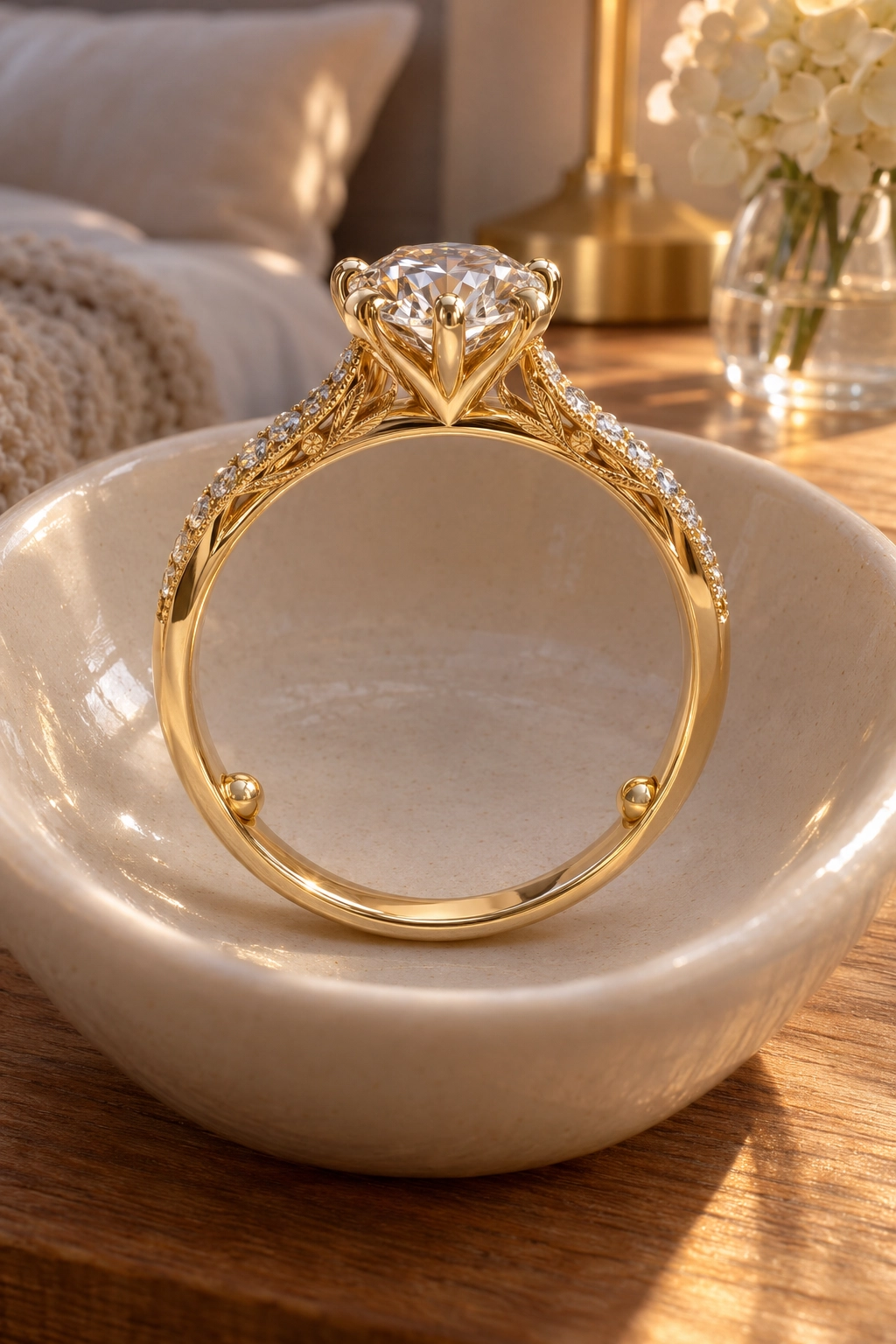
If a ring clears your knuckle but still turns at the base, an insert may feel bulky. Take your focal ring to a local bench jeweler and ask for sizing beads, also known as speed bumps.
The jeweler solders two tiny matching gold or platinum spheres inside the bottom shank at the 4 o’clock and 8 o’clock spots. Those two beads leave center room for your knuckle to pass through, then press gently against the soft sides of your finger base to lock the stone upright. For custom rings, ask for a European shank (Euro-shank) with a flat squared bottom. A squared base can help limit rotation. Ask your jeweler whether it suits your finger shape and setting. Keep your extra stackers safe in a Glazed Ceramic Ring Dish whenever you remove them for hand cream or dishes.
Anti-Spin Fixes Compared: Silicone Adjusters vs. Sizing Beads vs. Soldering
Pick silicone adjusters for seasonal winter loosening and fast budget relief. Choose bench-jeweler sizing beads if you have large knuckles and want a longer-term adjustment. Solder your stack together only when you plan to wear those exact bands as one single wide unit every day.
| Anti-Spin Fix | Typical Cost | Reversible? | Clears Big Knuckles? | Best Use Case |
|---|---|---|---|---|
| Silicone Spiral Adjuster | $6 to $10 | Yes (Instant) | Yes | Winter finger shrinkage and travel |
| Snug Top Capping Band | $15 to $80 | Yes (Instant) | Yes | Loose heirlooms and styled stacks |
| Sizing Beads (Speed Bumps) | $50 to $120 | Yes (Jeweler) | Yes (Best Fit) | Large knuckles with top-heavy solitaires |
| European Shank (Euro-Shank) | $150 to $350 | No | Moderate | Custom builds and heavy 2ct+ stones |
| Soldering Stack Together | $60 to $150 | Difficult | Moderate | Bridal sets worn together 100% of the time |
How to Keep Mixed-Metal and Diamond Stacks Scratch-Free
Pair metals with matching hardness whenever you build a daily stack. Wear 14k gold beside 14k gold, or place a smooth spacer between 18k gold and platinum so harder alloys never wear down softer bands. Keep thick fidget spinner rings on a solo index or thumb finger so tight stacks never jam their moving track.
Wipe rings with a soft cloth after wearing them, as Jewelers of America recommends. Lukewarm water, mild dish soap, and a soft brush can work for many gemstones, but check the stone, treatments, and setting before soaking or brushing. Ask a jeweler first if a stone is loose, the setting is fragile, or you are unsure how the gem was treated. Dry the bands before restacking them for your next look, including semi-formal outfits.
Frequently Asked Questions About Spinning Ring Stacks
Does adding a second ring stop an engagement ring from spinning?
A second band can make the stack feel snugger and may reduce movement. The effect varies with the bands and how they fit together. Try a comfortable straight or contoured band beside your solitaire and check the fit of the full stack.
Should I solder my ring stack together to stop spinning?
Soldering locks two or three bands into one wide shank, which stops independent spinning and stops metal rubbing between bands. Skip soldering if you like wearing your wedding band solo at the gym, on beach trips, or during pregnancy swelling.
Why do my rings spin more in winter than in summer?
Fingers can be smaller in cold weather, so a ring that fits in warmer conditions may turn more easily in winter. The amount varies from person to person.
What are ring speed bumps and do they hurt?
Sizing beads are small metal bumps a jeweler adds inside the band to help reduce turning. Comfort depends on placement and fit. If they pinch or hurt, ask your jeweler to check the fit.


